The Soviet web: the tale of how the USSR almost invented the internet
When brilliant Soviet cyberneticist Viktor Glushkov designed a blueprint for a computerised planning system, the Soviet Union looked on track to become web pioneers. In the end, however, there was to be no digital network. Justin Reynolds tells the story of how the Soviets nearly created the internet
Visions of an advanced postcapitalist economy run by digital networks have long haunted the socialist imagination. Alexander Bogdanov’s 1909 Bolshevik sci-fi fantasy novel Red Star imagined the achievement of communist utopia on Mars, an abundance of wealth and leisure made possible by a sophisticated command economy planned and automated by prototype computers. Cerebral Martian engineers, their “delicate brains” connected to the machines through “subtle and invisible” threads, fine-tune economic inputs and outputs from a control room tracking production gluts and shortfalls.
Bogdanov’s thought experiment anticipated contemporary speculations about the possibilities digital networks open for new forms of economic exchange. One current best-seller, Paul Mason’s Postcapitalism, suggests that the ease with which information can be shared online, together with the advent of 3D printing technologies, is seeding a new economy in which goods and services can be exchanged for free. Another, Nick Srnicek and Alex Williams’s Inventing the Future, envisages an automated economy set in motion by the seamless interactions of millions of connected devices.
Cybersyn control room, Chile. Image: Gui Bonsieppe under a CC license
Many of today’s digital utopians draw inspiration from a real world attempt to implement electronic socialism: Salvador Allende’s abortive 1970s programme that sought to rationalise and democratise the planning of the Chilean economy through a nationwide network of telex machines. “Project Cybersyn” was cut short by Pinochet’s coup, but, helped by the surviving images of its iconic retro-futurist central operations room, the episode continues to symbolise radical aspirations to harness technology to break through to an alternative economic system.
Cybersyn was conceived during the same era as a still more ambitious but less well documented project: a well-resourced programme to digitise the planning of the Soviet Union’s vast command economy. The labyrinthine story of the “Soviet internet” is told in detail in a new book by Tulsa University professor Benjamin Peters, who, venturing into Moscow archives “lit by a single flickering light bulb”, pieces together the tale of plans to supercharge the USSR’s stuttering economy through the installation and networking of a constellation of mainframe computers at major production points from Leningrad to Siberia. The project was one of the most spectacular manifestations of the restless Soviet ambition to lever technology to create the material conditions for “full communism”.
From the beginning the USSR was intoxicated by an aesthetic of the machine. Lenin equated the achievement of socialism with the electrification of the nation. Planners sought to apply Fordist production techniques on an unprecedented scale. And avant-garde designers, architects and filmmakers insisted engineering was art, and art was engineering. But those visions far outran the technology available to the impoverished state. Stalin resorted to a forced march industrialisation programme that rammed Russia’s patchwork economy into a rigid pyramid structure, the output of factories and farms coordinated through targets set by regional authorities reporting to a central planning ministry.
This hulking machinery carried the USSR through successive five year plans achieved at the cost of monumental waste of human life and natural resources. Calculation errors caused chronic production shortfalls or overshoots that cascaded up and down the command chain and rolled on from year to year. By 1960, 3 million officials were attempting to track the economy’s unfathomable information flows, and it was forecast that if future growth targets were to be met, a bureaucracy equivalent to the entire working population would be required with 20 years.
Map of OGAS computer centres, 1964
To get things done, planners, managers and workers resorted to informal networks that criss-crossed official hierarchies. Far from being the rigid hierarchy of popular imagination, the Soviet economy relied on a vortex of informal ties and personal favours. But by the Khrushchev era, science seemed to be catching up with those early revolutionary dreams. Inspired by the new field of cybernetics — the study of information systems in nature, machines and human societies — Soviet economists began to reimagine the command economy as a reflexive system capable of re-calibrating planning flows in response to new inputs. Emerging mainframe computing technologies would provide the number-crunching firepower to make it possible.
By the late 1950s a comprehensive blueprint for a computerised planning system had emerged: the All-State Automated System — known as the OGAS — designed by the brilliant cyberneticist Viktor Glushkov. Glushkov proposed overlaying a vast digital network on the economy’s pyramid structure: some 20,000 mainframes at major production points would be connected to hundreds of regional administrative centres pushing data to a central processing hub in Moscow.
The OGAS anticipated cloud computing, allowing authorised workers, managers and administrators to input information to a central database accessible to all users, and looked ahead to today’s virtual currencies, proposing that physical money would be rendered redundant by the system’s capacity to process transactions using electronic receipts. The proposal was unashamedly utopian. Glushkov’s design aspired to the Marxist ideal of a rational economic system guided by worker inputs, and, like the engineers who led the Soviet space programme, he was captivated by the Russian cosmist desire for a kind of synthetic immortality. Rather like 21st century advocates of a “technological singularity”, Glushkov believed that, one day, ever more advanced networks would make it possible to upload personalities embedded in human neural circuits to a supercomputer.
The scale of the OGAS matched its philosophical grandeur: costing 20 billion rubles (today approximately $333.4 million) and requiring some 300,000 operators it would be rolled out over 30 years. And, in the beginning at least, it was an ambition the Soviet leadership shared. Glushkov was appointed head of a new Institute of Cybernetics, one of several well-funded research centres with a remit for digital innovation.
Viktor Glushkov speaking about management information systems. Image: ResearchGate
The project prospered during the Cold War high point of post-war Soviet technological optimism, the era of Sputnik and Gagarin. When rumours of Russian ambitions for rapid economic expansion reached an American government already concerned that Soviet space exploits signalled an emerging communist supremacy, the US redoubled efforts to build its own network, the ARPANET, the forerunner of today’s internet.
By 1970 Glushkov’s plan was ready to go before the Politburo for approval, which, with the promised backing of General Secretary Leonid Brezhnev and Premier Aleksei Kosygin, it seemed destined to secure. But it was not to be. Entering Stalin’s former office in the Kremlin to formally present his proposal, Glushkov noticed that Brezhnev and Kosygin’s chairs were empty. Their absence — ostensibly to attend state functions elsewhere — emboldened Finance Minister Vasily Garbuzov to force through a counterproposal that ripped the heart out of the plan. Permission was given to install computers at key production centres but not, crucially, for linking them together. The existing planning bureaucracy would be retained: there was to be no digital network. The OGAS, it seemed, whatever its promise, threatened too many vested interests.
After repeatedly failing over the following years to revive interest in his plan, the rational Glushkov began to succumb to conspiracy theories, suggesting interference by American spies, and that the emergency landing of a flight he had taken shortly after the Politburo meeting had been caused by sabotage. Glushkov died in 1982, by which time the Soviet leadership had pinned its hopes for economic renewal on limited market liberalisation, an approach that rendered the concept of a computerised command economy redundant.
In retrospect, the OGAS seems absurdly ambitious. The development of such a vast network would have necessitated a depth and duration of political commitment even an authoritarian regime could unlikely sustain, and it is doubtful that early mainframe technology would have been capable of processing so much data (quite apart from the vexed question of whether the very concept of a complex planned economy makes sense.) The OGAS could only have been conceived during an era when boundless faith in the possibilities of new technology, and Cold War imperatives, made utopian thinking possible.
https://www.calvertjournal.com/articles ... r-glushkov
Soviet cybernetics
-
Διάδοχος

- Danchō

- Δημοσιεύσεις: 13240
Soviet cybernetics


0 .
«Και η κουτσή Μαρία είναι εθνικιστές. Δηλαδή σε αυτό το επίπεδο; Εμείς είμαστε όλος ο πλανήτης!»
«Εμείς· οι Aλεξανδρείς, οι Aντιοχείς, οι Σελευκείς, κ’ οι πολυάριθμοι επίλοιποι Έλληνες Aιγύπτου και Συρίας, κ’ οι εν Μηδία, κ’ οι εν Περσίδι, κι όσοι άλλοι. Με τες εκτεταμένες επικράτειες, με την ποικίλη δράσι των στοχαστικών προσαρμογών. Και την Κοινήν Ελληνική Λαλιά ώς μέσα στην Βακτριανή την πήγαμεν, ώς τους Ινδούς. Για Λακεδαιμονίους να μιλούμε τώρα!»
«Εμείς· οι Aλεξανδρείς, οι Aντιοχείς, οι Σελευκείς, κ’ οι πολυάριθμοι επίλοιποι Έλληνες Aιγύπτου και Συρίας, κ’ οι εν Μηδία, κ’ οι εν Περσίδι, κι όσοι άλλοι. Με τες εκτεταμένες επικράτειες, με την ποικίλη δράσι των στοχαστικών προσαρμογών. Και την Κοινήν Ελληνική Λαλιά ώς μέσα στην Βακτριανή την πήγαμεν, ώς τους Ινδούς. Για Λακεδαιμονίους να μιλούμε τώρα!»
-
Διάδοχος
- Danchō
- Δημοσιεύσεις: 13240
Re: Soviet cybernetics
Academician Victor M. Glushkov, vice president of the Ukrainian Academy of Sciences, director of the Institute for Cybernetics in Kiev, and holder of the IFIP Silver-Core, died on January 30, 1982, after a long and severe illness.
Glushkov was born on August 24, 1923, in Rostov on the river Don. After graduating from Rostov University he began his career as an assistant at the Ural Timber Institute. His first scientific contributions were in the field of modern algebra, where he obtained some fundamental results in the theory of graphs; they provided the basis for his doctoral dissertation (1955).
In 1956 he went to Kiev. From that moment all his activities were closely connected with the Ukrainian Academy of Sciences. In the same year, a computing center was established within the academy, in whose organization Glushkov played an essential role and of which he was appointed director. Under his leadership the scientific developments of the computing center progressed at an amazing pace, and its excellent international reputation was established.
In 1962 the computing center was transformed into the Institute of Cybernetics of the Ukrainian Academy of Sciences. Glushkov became its director, a position he held until his death. The institute was of primary importance for the development of the theory and application of computers and informatics in the Soviet Union. Many well-known scientists have worked and are still working there-among others N.M. Amosov (medicine and biology) and V.A. Kovalevsky (pattern recognition).
Glushkov was a scientist with a very broad range of interests. Beginning with abstract algebra, he went on to the theory of automata and still further to the theory of computers and programming languages. In addition to the theoretical aspects, he also dealt with the practical design of computers and, during the last years of his life, of computing networks. It is difficult to find any branch of computer science to which Glushkov did not make new and original contributions. His books, Synthesis of Computing Automata (1962) and Introduction to Cybernetics (really: Automata Theory) (1964), are classics even beyond the socialist countries. He designed several special programming languages such as ANALYTIC, similar to but much more comprehensive than FORMAC, for the analytical transformation of algebraic expressions on the computer. The application of computers for process control was the first practical achievement of the Institute of Cybernetics making use of the new technology, and many participants of the IFAC Congress of 1960 in Moscow will remember Glushkov and will possibly have visited the Kiev Institute.
The first step toward international cooperation in the field of computer science was followed by many more. Glushkov contributed, in particular, significantly to the activities of IFIP He was a member of the Program Committee for the 1968 and 1974 congresses and was chairman in 1971. He participated as an IFIP representative in the preparation of the UN report, "Computers for Development." The IFIP Silver-Core award was only a modest token of gratitude for his work in IFIP.
It is not only the computer community of the Soviet Union and of the socialist countries that has lost one of its most prominent and active members-it is the computer community of the whole world. V.M. Glushkov's scientific work and the results he achieved in science and practice will for a long time to come influence the development of computer science throughout the whole world.
http://history.computer.org/pioneers/glushkov.html


In the case of the OGAS, competing interests within the Soviet bureaucracy also worked to counter attempts to rationalize economic management with computers. The system promised to improve the functioning of the state by eliminating corruption, identifying inefficiencies, increasing the amount of data collected and stored, and making information more readily available, all of which also served to implement new forms of state surveillance and control. At the same time, those who benefited from black markets, bribes, and bartering had little reason to support a technology aimed at their elimination. Nor did the different ministries, agencies, and offices in the Soviet state wish to adopt a plan that might limit their influence, reconfigure power relationships in ways that were disadvantageous, or cut their funding.
As a result, the government chipped away at Glushkov’s ambitious plan to create a national network of tens of thousands of computer centers across the Soviet nation and reduced it to the creation of hundreds of local computer centers during the 1960s and 1970s that were not even connected. Eventually, the Soviets abandoned the network project altogether.
http://www.publicbooks.org/the-politics ... -a-nation/
Paladin της κεντρικά σχεδιασμένης οικονομίας.
Ένας πραγματικός Κομμουνιστής.
0 .
«Και η κουτσή Μαρία είναι εθνικιστές. Δηλαδή σε αυτό το επίπεδο; Εμείς είμαστε όλος ο πλανήτης!»
«Εμείς· οι Aλεξανδρείς, οι Aντιοχείς, οι Σελευκείς, κ’ οι πολυάριθμοι επίλοιποι Έλληνες Aιγύπτου και Συρίας, κ’ οι εν Μηδία, κ’ οι εν Περσίδι, κι όσοι άλλοι. Με τες εκτεταμένες επικράτειες, με την ποικίλη δράσι των στοχαστικών προσαρμογών. Και την Κοινήν Ελληνική Λαλιά ώς μέσα στην Βακτριανή την πήγαμεν, ώς τους Ινδούς. Για Λακεδαιμονίους να μιλούμε τώρα!»
«Εμείς· οι Aλεξανδρείς, οι Aντιοχείς, οι Σελευκείς, κ’ οι πολυάριθμοι επίλοιποι Έλληνες Aιγύπτου και Συρίας, κ’ οι εν Μηδία, κ’ οι εν Περσίδι, κι όσοι άλλοι. Με τες εκτεταμένες επικράτειες, με την ποικίλη δράσι των στοχαστικών προσαρμογών. Και την Κοινήν Ελληνική Λαλιά ώς μέσα στην Βακτριανή την πήγαμεν, ώς τους Ινδούς. Για Λακεδαιμονίους να μιλούμε τώρα!»
-
Διάδοχος
- Danchō
- Δημοσιεύσεις: 13240
Re: Soviet cybernetics
https://hal.inria.fr/hal-01054648/document
http://www.computer-museum.ru/english/g ... itov_5.php
In 1950 Anatoly Kitov graduated from the (educational) F.E. Dzerzhinskiy Artillery Academy of the USSR Ministry of Defence in Moscow, being distinguished with a gold medal. His name is engraved on special marble wall-plate, placed in the academy’s celebration hall. Kitov had been also awarded with a personal “Stalin Stipend” for his success in studies.
In 1952 — 1953 A.I. Kitov headed department of computing machines at the Academy of Artillery Sciences[1] (USSR Ministry of Defence), which existed until 1953. USSR Marshall of artillery N.N. Voronov was the president of that military scientific academy, which -among other- headed a network of some scientific-research institutions and centres belonging to the Ministry of Defence. Marshall Voronov invited Kitov to be his adviser. As an excellent student, Kitov had right of the appointment free choice[2] of all vocations available within the – both scientific and administrative– area, controlled by the ministry.
It was at the Academy of Artillery Sciences (AAS), where Kitov started his preparations for establishing the first computer centre at the ministry. In 1952 he successfully submitted dissertation thesis at the Academy Scientific-Research Institute N4 and received degree “Candidate of Technical Sciences”. His dissertation research topic was named ‘Digital Computer Programming of Ballistics Problems’. That was the USSR first scientific dissertation on electronic computer programming for military problems (technical).
In July 1953 the AAS was closed and Kitov received appointment as the head of computer department at his «Alma mater» – F.E. Dzerzhinskiy Artillery Academy. He remained in that position until May 1954. By that time computer department grew to be a serious scientific team – about forty people were working there, most of them officers. That was primarily the result of Kitov’s inexhaustible energy and ceaseless efforts.
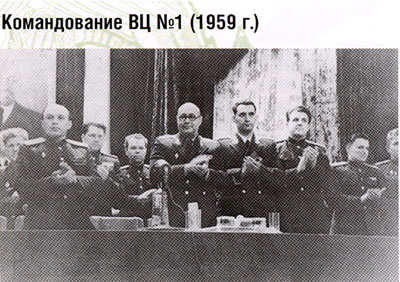
The first three departments of the Computer Centre N1 (CC-1) with officially confirmed lists of personnel, registered as the military Regiment N-01168, were established by the directive of the Ministry of Defence. The date of its issue should be also considered as the foundation date. From the 1st of May 1954 A.I. Kitov was appointed as the first head of the developed Computer Centre N-1 (Regiment N-01168) of the USSR Ministry of Defence. So read the official Directive N-0873 of the Main Personnel Department of the USSR Ministry of Defence. Kitov was just 33 then. He received military rank “Engineer – Lieutenant-Colonel”[3] only half-year before, in December 1953. So, Regiment N-01168 was born at the F.E. Dzerzhinskiy Artillery Academy and remained there for about a year.
By 1954 only computers of the first generation were in operation. They were based on electron tubes and didn’t have universal programs[4], which could be used by all programmers working on that machine. That time Soviet computers were practically as advanced as the American ones. Some technical lagging was in peripheral devices (input-output systems, magnetic tapes). There were three basic development centres[5]: Institute of Precession Mechanics and Computer-engineering (under S.A. Lebedev), Laboratory of electric modelling of the USSR Academy of Sciences and powerful research, design and production complex – Special Design Bureau 245 (SDB-245) belonging to the USSR Ministry of Radio-Engineering (integrated into military production complex). After graduation in 1950 Kitov himself was sent to the SDB-245 to study electronic computers and possibilities of their military applications[6].
By that time regular training of young computer specialists – engineers and programmers – had already started. Thus, the Moscow Power-Engineering Institute[7] already had in its curriculum –and conducted– the courses for speciality “Computer Engineering”. Academician S.A. Lebedev himself was the lecturer. The first group graduated with this speciality in 1953. Practically all those graduates eventually grew into prominent scientists, applied specialists and leaders of famous research and design teams.
In the beginning the Computer Centre N-1 (CC-1) had three scientific departments: department with operating computer STRELA – “Integral”, programming department and so called maintaining group.
One of the first and most important organisational problems of the centre was the need in quick but correct completion of the staff. Here the leading role was performed by its factual founder A.I. Kitov. Ministerial administration charged A.I. Kitov with the task of finding the suitable graduates of the Artillery Academy, Moscow Power-Engineering Institute (MPEI), Moscow State University (MSU) and some others for the work at computer centre.
Among them there were also the students who first graduated form MPEI, MSU, etc., and then studied at the Artillery Academy to obtain the second specialisation, with military diploma. They all naturally received military rank ‘Lieutenant’. The CC-1 (regiment N-01168) was first subjected to Marshall Voronov, if I am not mistaken, and then directly to the, educational, F.E. Dzerzhinskiy Artillery Academy. Here, Kitov and – generally speaking, the Ministry of Defence – rather unexpectedly got a piece of luck. There was the whole group of the MPEI graduates among the academy students. All of them received the speciality “Computer Engineering”, which was absolutely new educational subject then and was taught only at the MPEI. At the academy they were trained to be specialists on rocket control. Those young people were graduates of the second group, the first one received diplomas a year before, but Kitov managed to find A.N. Nechaev from that first group. Nechaev had already a year experience of the work with computer STRELA at the SDB-245 and was also enlisted to the CC-1. Therefore CC-1 received a team of the best possibly prepared Soviet young specialists available at that time. Here are their names: Artem Nechaev, Boris Bukin, Anatoly Gusev, Vladimir Isaev, Gennady Ovsyannikov, Gleb Smirnov, Alexander Sukhov, Boris Trifonov and Yuri Uvarov. They all formed the core of the computer STRELA operation and maintenance department, named ‘Integral’. Then STRELA was the centre’s main (and practically the only) computer; beginning from 1956 it calculated flight orbits of all satellites launched in the USSR.

This article examines the first Soviet initiative to develop a national computer network as the basis for an automated information system for the management of the national economy. This initiative was made by prominent Soviet scientist Engineer Colonel Anatoly Ivanovich Kitov whose 90th anniversary is celebrated in 2010. The article attempts to view the history of Soviet computer networks as part of Soviet history, in which technology and politics closely intertwined.
https://ieeexplore.ieee.org/document/5735293
Ο Γενάρχης των σοβιετικών σαημπερνετιστών.
Απιθανοτεράστιο Κομμούνι.
0 .
«Και η κουτσή Μαρία είναι εθνικιστές. Δηλαδή σε αυτό το επίπεδο; Εμείς είμαστε όλος ο πλανήτης!»
«Εμείς· οι Aλεξανδρείς, οι Aντιοχείς, οι Σελευκείς, κ’ οι πολυάριθμοι επίλοιποι Έλληνες Aιγύπτου και Συρίας, κ’ οι εν Μηδία, κ’ οι εν Περσίδι, κι όσοι άλλοι. Με τες εκτεταμένες επικράτειες, με την ποικίλη δράσι των στοχαστικών προσαρμογών. Και την Κοινήν Ελληνική Λαλιά ώς μέσα στην Βακτριανή την πήγαμεν, ώς τους Ινδούς. Για Λακεδαιμονίους να μιλούμε τώρα!»
«Εμείς· οι Aλεξανδρείς, οι Aντιοχείς, οι Σελευκείς, κ’ οι πολυάριθμοι επίλοιποι Έλληνες Aιγύπτου και Συρίας, κ’ οι εν Μηδία, κ’ οι εν Περσίδι, κι όσοι άλλοι. Με τες εκτεταμένες επικράτειες, με την ποικίλη δράσι των στοχαστικών προσαρμογών. Και την Κοινήν Ελληνική Λαλιά ώς μέσα στην Βακτριανή την πήγαμεν, ώς τους Ινδούς. Για Λακεδαιμονίους να μιλούμε τώρα!»
-
ВладимирВладимирович

- Supreme poster
- Δημοσιεύσεις: 9706
- Τοποθεσία: ГуляйПоле
Re: Soviet cybernetics
Εχω περασει απο τα ερείπια του οταν ως φοιτητής πηγα για πρακτικη στην κεντρικη στατιστικη υπηρεσια.
Βασικα απο τοτε αρχησα να ασχολουμαι με διαχείριση βασεων δεδομένων.
Βασικα απο τοτε αρχησα να ασχολουμαι με διαχείριση βασεων δεδομένων.
0 .
ΤΣΠΡΤΚ ΓΜΣ
-
Διάδοχος
- Danchō
- Δημοσιεύσεις: 13240
Re: Soviet cybernetics
Ήταν η εποχή που ηττήθηκε ο επιστημονικός σοσιαλισμός, όπου την εξουσία πήραν οι μαυραγορίτες μάνατζερς τύπου Χρουτσώφ.
1 .
«Και η κουτσή Μαρία είναι εθνικιστές. Δηλαδή σε αυτό το επίπεδο; Εμείς είμαστε όλος ο πλανήτης!»
«Εμείς· οι Aλεξανδρείς, οι Aντιοχείς, οι Σελευκείς, κ’ οι πολυάριθμοι επίλοιποι Έλληνες Aιγύπτου και Συρίας, κ’ οι εν Μηδία, κ’ οι εν Περσίδι, κι όσοι άλλοι. Με τες εκτεταμένες επικράτειες, με την ποικίλη δράσι των στοχαστικών προσαρμογών. Και την Κοινήν Ελληνική Λαλιά ώς μέσα στην Βακτριανή την πήγαμεν, ώς τους Ινδούς. Για Λακεδαιμονίους να μιλούμε τώρα!»
«Εμείς· οι Aλεξανδρείς, οι Aντιοχείς, οι Σελευκείς, κ’ οι πολυάριθμοι επίλοιποι Έλληνες Aιγύπτου και Συρίας, κ’ οι εν Μηδία, κ’ οι εν Περσίδι, κι όσοι άλλοι. Με τες εκτεταμένες επικράτειες, με την ποικίλη δράσι των στοχαστικών προσαρμογών. Και την Κοινήν Ελληνική Λαλιά ώς μέσα στην Βακτριανή την πήγαμεν, ώς τους Ινδούς. Για Λακεδαιμονίους να μιλούμε τώρα!»
-
ВладимирВладимирович
- Supreme poster
- Δημοσιεύσεις: 9706
- Τοποθεσία: ГуляйПоле
Re: Soviet cybernetics
Τα δίκτυα υπηρχαν και στα 90-ς, παιζει να υπαρχουν και σημερα.
0 .
ΤΣΠΡΤΚ ΓΜΣ
-
Διάδοχος
- Danchō
- Δημοσιεύσεις: 13240
Re: Soviet cybernetics
Όχι στην έκταση και ολοκληρωτική μορφή που επεδίωκαν οι σοβιετικοί σαημπερνετικοί μαρξιστές-λενινιστές υπερ-homo sapiens.
Ο Γκλούσκωφ εν τω μεταξύ πρέπει να κοιμόταν με τα Άπαντα Λένιν κάτω απο το μαξιλάρι του
The scale of the OGAS matched its philosophical grandeur: costing 20 billion rubles (today approximately $333.4 million) and requiring some 300,000 operators it would be rolled out over 30 years.
Ο Γκλούσκωφ εν τω μεταξύ πρέπει να κοιμόταν με τα Άπαντα Λένιν κάτω απο το μαξιλάρι του
Glushkov’s design aspired to the Marxist ideal of a rational economic system guided by worker inputs, and, like the engineers who led the Soviet space programme, he was captivated by the Russian cosmist desire for a kind of synthetic immortality.
December (Early)
Publication of Lenin's State and Revolution (which had been written a few months earlier). In this major theoretical work there is little discussion of workers' control and certainly no identification of socialism with "workers' management of production". Lenin speaks in rather abstract terms of "immediate change such that all fulfil the functions of control and supervision, that all become 'bureaucrats' for a time, and that no one therefore can become a 'bureaucrat' ".
This was part of the libertarian rhetoric of the Bolshevism of 1917. But Lenin, as usual, had his feet firmly on the ground. He spelled out what this would mean in practice. The development of capitalism created the "economic prerequisites" which made it "quite possible, immediately, overnight after the overthrow of the capitalists and the bureaucrats, to supersede them in the control of production and distribution, in the work of keeping account of labour and its products by the armed workers, by the whole of the armed population":
"The accountancy and control necessary for this have been so utterly simplified by capitalism that they have become the extraordinarily simple operations of checking, recording and issuing receipts, which anyone who can read and write and who knows the first four rules of arithmetic can perform."
https://www.marxists.org/archive/brinto ... rol/02.htm
0 .
«Και η κουτσή Μαρία είναι εθνικιστές. Δηλαδή σε αυτό το επίπεδο; Εμείς είμαστε όλος ο πλανήτης!»
«Εμείς· οι Aλεξανδρείς, οι Aντιοχείς, οι Σελευκείς, κ’ οι πολυάριθμοι επίλοιποι Έλληνες Aιγύπτου και Συρίας, κ’ οι εν Μηδία, κ’ οι εν Περσίδι, κι όσοι άλλοι. Με τες εκτεταμένες επικράτειες, με την ποικίλη δράσι των στοχαστικών προσαρμογών. Και την Κοινήν Ελληνική Λαλιά ώς μέσα στην Βακτριανή την πήγαμεν, ώς τους Ινδούς. Για Λακεδαιμονίους να μιλούμε τώρα!»
«Εμείς· οι Aλεξανδρείς, οι Aντιοχείς, οι Σελευκείς, κ’ οι πολυάριθμοι επίλοιποι Έλληνες Aιγύπτου και Συρίας, κ’ οι εν Μηδία, κ’ οι εν Περσίδι, κι όσοι άλλοι. Με τες εκτεταμένες επικράτειες, με την ποικίλη δράσι των στοχαστικών προσαρμογών. Και την Κοινήν Ελληνική Λαλιά ώς μέσα στην Βακτριανή την πήγαμεν, ώς τους Ινδούς. Για Λακεδαιμονίους να μιλούμε τώρα!»
-
ВладимирВладимирович
- Supreme poster
- Δημοσιεύσεις: 9706
- Τοποθεσία: ГуляйПоле
Re: Soviet cybernetics
Οχι βεβαια, δεν ηταν ολοκληρωμένο εργο, ηταν fragmentary αλλα σε γενικες γραμμες λειτουργικο.
0 .
ΤΣΠΡΤΚ ΓΜΣ
-
break

- Basic poster
- Δημοσιεύσεις: 581
Re: Soviet cybernetics
Παρωχημένες τεχνολογίες mainframes θυμίζουν όλα αυτά. Δεν έχουν σχέση με το internet - όπως διαφημίζει ο τίτλος του άρθρου - που αν κάτι το κάνει να ξεχωρίζει με ότι προϋπήρξε είναι η πλήρη αποκέντρωση και ο σχεδόν μηδενικός κεντρικός έλεγχος.
0 .
-
Διάδοχος
- Danchō
- Δημοσιεύσεις: 13240
Re: Soviet cybernetics
internet = διαδίκτυο = δίκτυο δικτύων
Παρωχημένο enterprise resource management
Παρωχημένο enterprise resource management
0 .
«Και η κουτσή Μαρία είναι εθνικιστές. Δηλαδή σε αυτό το επίπεδο; Εμείς είμαστε όλος ο πλανήτης!»
«Εμείς· οι Aλεξανδρείς, οι Aντιοχείς, οι Σελευκείς, κ’ οι πολυάριθμοι επίλοιποι Έλληνες Aιγύπτου και Συρίας, κ’ οι εν Μηδία, κ’ οι εν Περσίδι, κι όσοι άλλοι. Με τες εκτεταμένες επικράτειες, με την ποικίλη δράσι των στοχαστικών προσαρμογών. Και την Κοινήν Ελληνική Λαλιά ώς μέσα στην Βακτριανή την πήγαμεν, ώς τους Ινδούς. Για Λακεδαιμονίους να μιλούμε τώρα!»
«Εμείς· οι Aλεξανδρείς, οι Aντιοχείς, οι Σελευκείς, κ’ οι πολυάριθμοι επίλοιποι Έλληνες Aιγύπτου και Συρίας, κ’ οι εν Μηδία, κ’ οι εν Περσίδι, κι όσοι άλλοι. Με τες εκτεταμένες επικράτειες, με την ποικίλη δράσι των στοχαστικών προσαρμογών. Και την Κοινήν Ελληνική Λαλιά ώς μέσα στην Βακτριανή την πήγαμεν, ώς τους Ινδούς. Για Λακεδαιμονίους να μιλούμε τώρα!»