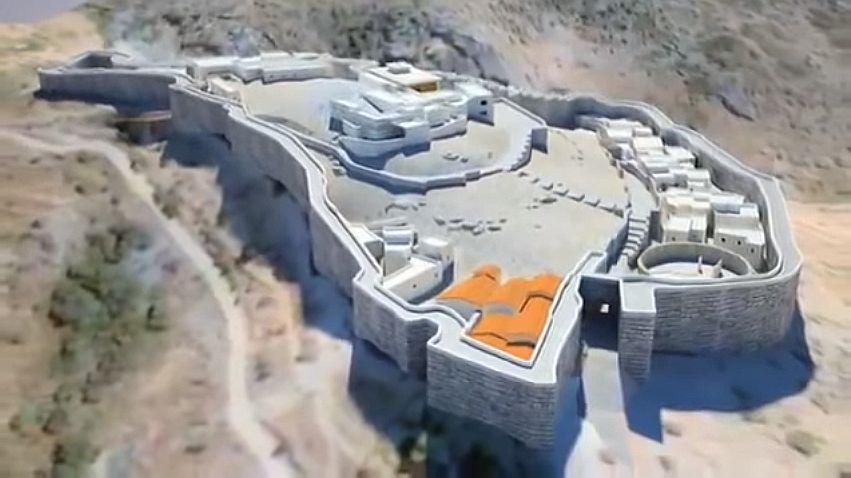
Σέσκλο 5000 π.Χ.

Οι γιαμνάδες της στέπας φέρανε την τέχνη του κτισίματος ακροπόλεων



Neolithic Age
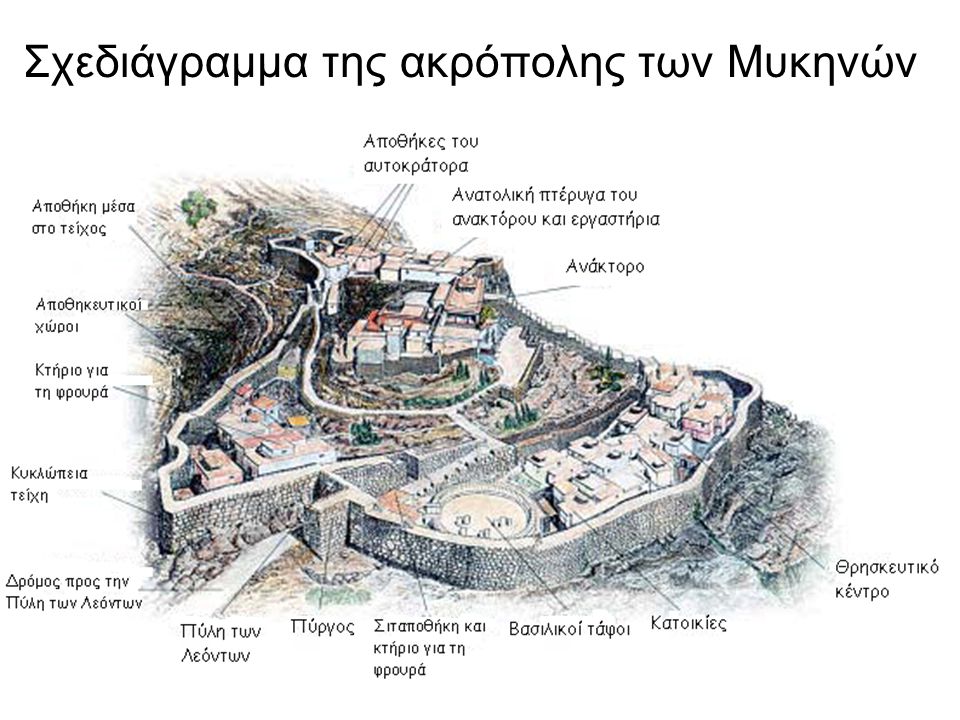
Mycenae, an acropolis site, was built on a hill 900 feet (274 metres) above sea level, some 19 kilometres (12 miles) inland from the Gulf of Argolis. Situated in the north-east corner of the Argive plain, it easily overlooked the whole area and was ideally positioned to be a centre of power, especially as it commanded all easy routes to the Isthmus of Corinth. Besides its strong defensive and strategic position, it had good farmland and an adequate water supply.[3] There are only faint traces of Neolithic settlement on the site although it was continuously occupied from the Early Neolithic (EN; c. 5000–c. 4000 BC) through the Early Helladic (EH; c. 3200–c. 2000 BC) and Middle Helladic (MH; c. 2000–c. 1550 BC) periods. EN Rainbow Ware constitutes the earliest ceramic evidence discovered so far.[13]
Early and Middle Bronze Age
The population had grown considerably by the Middle Helladic. As elsewhere, a dominant Cretan influence prevailed from c. 1600 BC, the first evidence of this coming from the shaft graves discovered in 1876 by Heinrich Schliemann.[3] Schliemann's shaft graves came to be known as Circle A to distinguish them from the Circle B graves which were found at a later date, although Circle B are the earlier graves dated c. 1650 BC to c. 1550 BC and entirely within MHIII. Circle A is dated to the sixteenth century BC including the transition from Middle to Late Helladic IA (LHIA; c. 1550 – c. 1500 BC).[3] The contents of Circle B are less wealthy than those of Circle A.[14]
Pottery material spanning the entire Early Helladic was discovered 1877–78 by Panagiotis Stamatakis at a low depth in the sixth shaft grave in Circle A. Further EH and MH material was found beneath the walls and floors of the palace, on the summit of the acropolis, and outside the Lion Gate in the area of the ancient cemetery.[15] An EH–MH settlement was discovered near a fresh-water well on top of the Kalkani hill south-west of the acropolis.[15] The first burials in pits or cist graves manifest in MHII (c. 1800 BC) on the west slope of the acropolis, which was at least partially enclosed by the earliest circuit wall.
https://en.wikipedia.org/wiki/Mycenae#E ... Bronze_Age
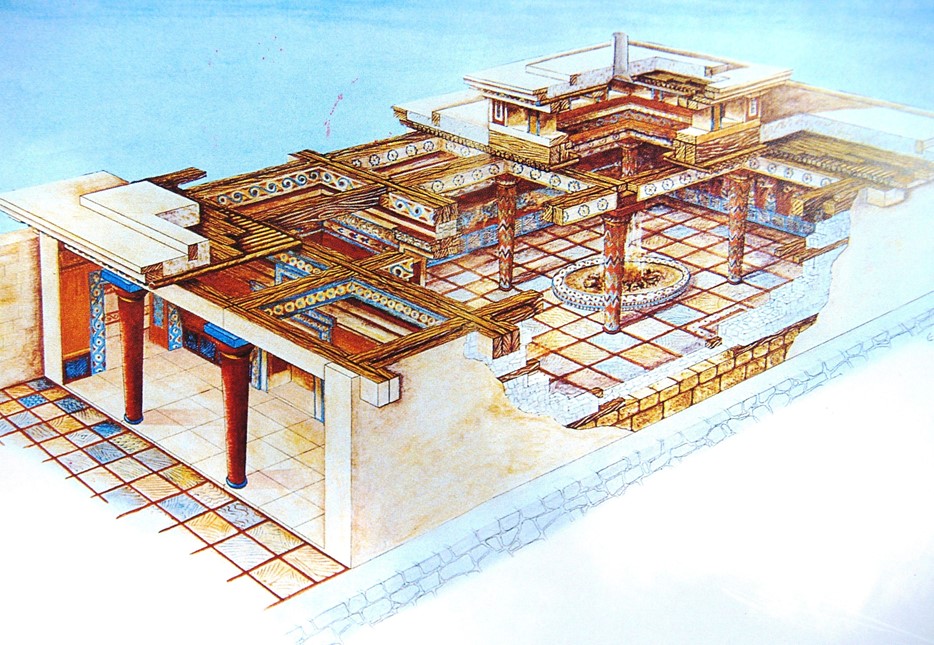


Adminović έγραψε:Την οποία Γραμμική σας γραφή έχετε αντιγράψει και εσείς και οι Προέλληνες από εμάς τους πολιτισμένους Παραδουνάβιους.
Εμείς σας μάθαμε να γράφετε.

Adminović έγραψε:[
ωοοου γιες γιες γιες !!!! .gif "Laughing")

Προέλλην έγραψε:
[
Άξεστοι βάρβαροι. Καμιά τέχνη, κανένας πολιτισμός, όλα κλεμμένα απο τους Μινωϊτες - Προέλληνες.

Adminović έγραψε:
Την οποία Γραμμική σας γραφή έχετε αντιγράψει και εσείς και οι Προέλληνες από εμάς τους πολιτισμένους Παραδουνάβιους.
Εμείς σας μάθαμε να γράφετε.

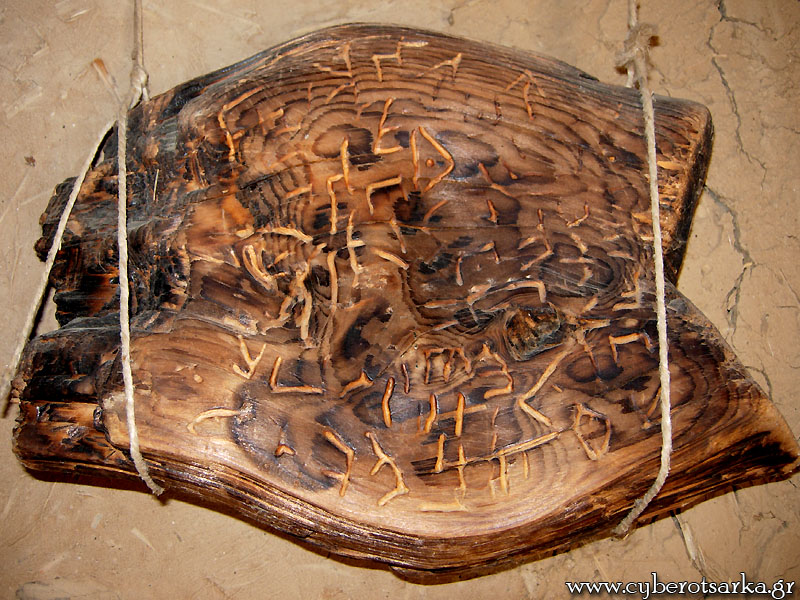
Προέλλην έγραψε:
The real thing, Kνωσός:

