Τα χειρότερα αεροπορικά δυστυχήματα

Θέματα ιστορικού και αρχαιολογικού ενδιαφέροντος.
Τσακαλι

Τα χειρότερα αεροπορικά δυστυχήματα

Δημοσίευσηαπό Τσακαλι » 15 Μαρ 2015, 14:05

1989 Ενα Shorts 330 της Ολυμπιακής Αεροπλοΐας συνετρίβη στο όρος Κέρκης της Σάμου. Η πτήση εκτελούσε τη διαδρομή Θεσσαλονίκη - Σάμος - Κως. Και οι 34 επιβαίνοντες (31 επιβάτες και 3 μέλη πληρώματος) σκοτώθηκαν .


Το 1976 ενα NAMC YS-11A της Ολυμπιακής Αεροπλοΐας συνετρίβη κοντά στα Σέρβια του νομού Κοζάνης. Η πτήση εκτελούσε τη διαδρομή Αθήνα - Λάρισα - Κοζάνη. Λόγω κακοκαιρίας δεν κατάφερε να προσγειωθεί στη Λάρισα και συνέχισε προς Κοζάνη. Και οι 50 επιβαίνοντες (46 επιβάτες και 4 μέλη πληρώματος) σκοτώθηκαν.


8 Δεκεμβρίου 1969 Ένα Douglas DC-6 της Ολυμπιακής Αεροπορίας συνετρίβη κοντά στην Κερατέα. Η πτήση εκτελούσε τη διαδρομή Χανιά - Αθήνα Και οι 90 επιβαίνοντες (85 επιβάτες και 5 μέλη πληρώματος) σκοτώθηκαν .


Το χειροτερο ολων των εποχων εγινε στην Τενεριφη 1977 οπου συγκρουστηκαν δυο τζαμπο ενα της KLM με ενα της Pan America. Στο ενα σκοτωθηκαν ολοι οι επιβατες.

Εικόνα
0 .

Τσακαλι

Re: Τα χειρότερα αεροπορικά δυστυχήματα

Δημοσίευσηαπό Τσακαλι » 15 Μαρ 2015, 14:06

August 12, 1985. A Japan Air Lines 747 crashes near Mt. Fuji after takeoff from Tokyo on a domestic flight killing 520. The rupture of an aft bulkhead, which had undergone faulty repairs following a mishap seven years earlier, caused destruction of part of the airplane’s tail and rendered the jet uncontrollable. A JAL maintenance supervisor later committed suicide, while the president of the airline resigned, accepting full, formal responsibility for the crash and visiting victims’ families to offer a personal apology.

3. November 12, 1996. An Ilyushin IL-76 cargo plane from Kazakhstan collides in midair with a Saudia 747 near Delhi; all 349 aboard both planes are killed. The Kazakh crew had disobeyed instructions, and neither airplane was equipped with collision-avoidance technology.

4. March 3, 1974. In one of the most notorious and gruesome crashes ever, a THY (Turkish Airlines) DC-10 crashes near Orly airport killing all 346 passengers and crew. A poorly designed cargo door had burst from its latches, and the subsequent depressurization caused failure of the cabin floor and impairment of cables to the rudders and elevators. Out of control, the plane slammed into the woods northeast of Paris. McDonnell Douglas, maker of the DC-10, which would see even more controversy later, was forced to redesign its cargo door system.

5. June 23, 1985. A bomb planted by a Sikh extremist blows up an Air India 747 enroute between Toronto and Bombay (with stops in Montreal and London). The airplane fell into the sea east of Ireland killing 329. Investigators in Canada cited shortcomings in baggage screening procedures, screening equipment, and employee training. A second bomb, intended to blow up another Air India 747 on the same day, detonated prematurely in a luggage facility in Tokyo before being loaded aboard.

6. August 19, 1980. A Saudia L-1011 bound for Karachi returns to Riyadh, Saudi Arabia, following an in-flight fire that broke out just after departure. For reasons never understood, the crew takes its time after a safe touchdown and rolls to the far end of the runway before finally stopping. No evacuation is commenced, and the airplane then sits with its engines running for more than three minutes. Before any doors can be opened by the inadequately-equipped rescue workers at Riyadh, all 301 people on the widebody die as the passenger cabin is consumed by a flash-fire.

7. July 3, 1988. An Airbus A300 operated by Iran Air is shot down over the Straits of Hormuz by the US Navy destroyer Vincennes. The crew of the Vincennes, distracted by an ongoing gunbattle, mistakes the A300 for a hostile military aircraft and destroys it with two surface-to-air missiles. None of the 290 occupants survived.

8. May 25, 1979. As an American Airlines DC-10 lifts from the runway at Chicago’s O’Hare airport, an engine detaches and seriously damages a wing. Before its crew can make sense of the situation, the airplane rolls 90 degrees and disintegrates in a huge fireball about a mile beyond the runway. With 273 fatalities, this remains the worst-ever crash on US soil. Both the engine pylon design and airline maintenance procedures were faulted by NTSB investigators, and all DC-10s were temporarily grounded.

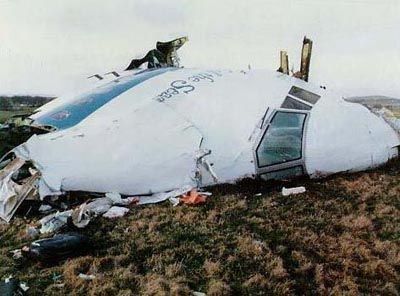
9. December 21, 1988. Two Libyan agents are later held responsible (one is convicted) for planting a bomb aboard Pan American flight 103, which blows up in the night sky over Lockerbie, Scotland killing 270 people, including 11 on the ground.

10. September 1, 1983. Korean Air Lines flight KL007, a 747 carrying 269 passengers and crew from New York to Seoul (with a technical stop in Anchorage) is shot down by a Soviet fighter after drifting off course — and into Soviet airspace — near Sakhalin Island in the North Pacific. The International Civil Aviation Organization (ICAO) later attributes the mysterious deviation to “A considerable degree of lack of alertness and attentiveness on the part of the flight crew.”

These accidents comprise twelve airplanes and ten airlines. Pan Am, now of course defunct but for decades one of the world’s highest-profile companies, played a role in two of them, as did the lesser-known Saudia (today called Saudi Arabian Airlines). In Saudia’s case, the company was absolved of blame in the midair collision (see No. 3), but its crew acted inexplicably in the fire at Riyadh (see No. 6). An interesting breakdown also includes the following:


Εικόνα


http://toolkit.bootsnall.com/transporta ... story.html
0 .

Τσακαλι

Re: Τα χειρότερα αεροπορικά δυστυχήματα

Δημοσίευσηαπό Τσακαλι » 15 Μαρ 2015, 14:08


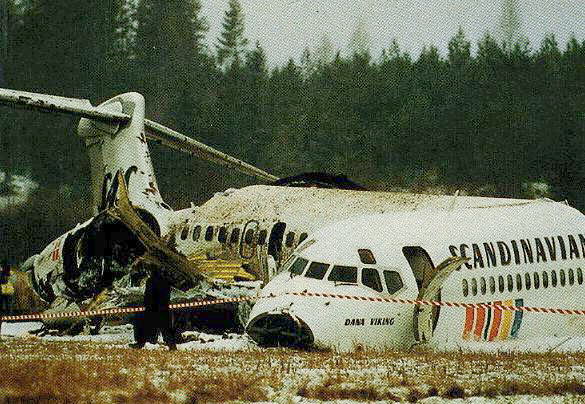
On 27 December 1991, SAS flight 751, an MD-81, OY-KHO "Dana Viking" crash landed at Gottröra (Sweden). During the initial climb, both engines ingested ice particles having broken loose from the wings, which had not been properly de-iced before departure. The ice damaged the compressor blades causing compressor stall. The stall caused repeated engine surges that destroyed both engines, leaving the aircraft with no propulsion. The aircraft landed in a field and broke in three parts. No fire broke out and all aboard the plane survived. Captain Stefan G. Rasmussen was later decorated by the Danish Queen for his performance. This incident was mentioned on The History Channel's True Action Adventures episode "Against All Odds" which first aired in the United States on 2 April 1997.
Εικόνα
0 .

Τσακαλι

Re: Τα χειρότερα αεροπορικά δυστυχήματα

Δημοσίευσηαπό Τσακαλι » 15 Μαρ 2015, 14:08

Ενα αλλο αεροπορικο δυστυχημα ασυνηθιστο εγινε στην Ρωσια οπου πιλοτος εβαλε τον γιο του στο πιλοτηριο.


The relief pilot,[2] Yaroslav Kudrinsky (Russian: Ярослав Кудринский), was taking his two children on their first international flight and they were brought to the cockpit while he was on duty. Aeroflot allowed families of pilots to travel at a discounted rate once per year.[2] With the autopilot active, Kudrinsky, against regulations, offered to let them sit at the controls. First his daughter Yana took the pilot's left front seat. Kudrinsky adjusted the autopilot's heading to give her the impression that she was turning the plane, though she actually had no control of the aircraft. Next, his son Eldar Kudrinsky (Russian: Эльдар Кудринский) took the pilot's seat. Unlike his sister, Eldar applied enough force to the control column to contradict the autopilot for 30 seconds.

What nobody knew was that by doing this, he disconnected the aileron's autopilot: the flight computer switched the plane's ailerons to manual control while maintaining control over the other flight systems. The plane did not audibly signal a warning that this had occurred, although an indicator light did come on. It apparently went unnoticed by the pilots, who had previously flown Russian-designed planes which had audible warning signals. The first to notice a problem was Eldar, who observed that the plane was banking right. Shortly after, the flight path indicator changed to show the new flight path of the aircraft as it turned. Since the turn was continuous, the resulting predicted flight path drawn on screen was a 180 degree turn. This indication is similar to the indications shown when in a holding pattern, where a 180 degree turn is intentional to remain in one place. This confused the pilots for nine seconds.

Soon the plane banked past a 45-degree angle (steeper than it was designed for). This increased the g-force on the pilots and crew, making it impossible for the crew to regain control. After banking as much as 90 degrees, the remaining functions of the autopilot tried to correct the plane's altitude by putting the plane in an almost vertical ascent, nearly stalling the plane. The co-pilot and Eldar managed to get the plane into a nosedive, which reduced the G-force on the pilots and enabled the Captain to take the controls. Though he and his co-pilot did regain control, their altitude by then was too low to recover, and the plane crashed at high speed, killing all aboard. The wreckage was located on a remote hillside approximately 25 kilometres (16 mi) from Mezhdurechensk in Kemerovo Oblast, southwest Siberia. Despite the struggles of both the pilots to save the aircraft, it was later concluded that if they had simply let go of the control column the plane would have automatically taken action to prevent it from stalling, thus saving the plane.

Families of western victims placed flowers on the crash site, while families of ethnic Chinese victims scattered pieces of paper with messages written on them around the crash site.[2]


απο wikipedia
0 .

Τσακαλι

Re: Τα χειρότερα αεροπορικά δυστυχήματα

Δημοσίευσηαπό Τσακαλι » 15 Μαρ 2015, 14:12


Η αεροπορική τραγωδία στο αεροδρόμιο της Τενερίφης, μια μοιραία σύγκρουση μεταξύ δύο Boeing 747 επιβατικών αεροσκαφών, συνέβη την Κυριακή 27 Μαρτίου 1977 στον αεροδιάδρομο του αεροδρομίου Los Rodeos (γνωστό σήμερα ως Βόρειο Αεροδρόμιο της Τενερίφης), στο ισπανικό νησί της Τενερίφης.
Πρόκειται για το πιο πολύνεκρο δυστύχημα στη ιστορία της αεροπλοΐας, με 583 νεκρούς.

Παρακολουθείστε το, διάρκειας 84 λεπτών, ντοκιμαντέρ του δυστυχήματος της σειράς Air Crash Investigations...


http://www.dimokratianews.gr/content/23 ... E%BD%CE%B1
0 .

Τσακαλι

Re: Τα χειρότερα αεροπορικά δυστυχήματα

Δημοσίευσηαπό Τσακαλι » 15 Μαρ 2015, 14:16

1985, Ιαπωνία - Πτήση 123 της Japan Airlines

Η συντριβή του Boeing 747 της Japan Airlines του 1985, είναι εκείνη που προκάλεσε τον μεγαλύτερο αριθμό θανάτων από την πτώση ενός μόνο αεροσκάφους. Σε αυτό το δυστύχημα, 520 επιβάτες και μέλη του πληρώματος έχασαν τη ζωή τους, όταν εξαιτίας λανθασμένης λειτουργίας του συστήματος ελέγχου εσωτερικής πίεσης, προκλήθηκε εκρηκτική αποσυμπίεση που κατέστρεψε το σύστημα πλοήγησης του αεροσκάφους. Παρά το γεγονός αυτό, οι πιλότοι κατάφεραν να ελέγξουν για περίπου μισή ώρα το αεροσκάφος, πριν αυτό συντριβεί τελικά στο βουνό Φούτζι.

Αξίζει να σημειωθεί ότι κάποιοι επιβαίνοντες επέζησαν από την πρόσκρουση, όμως ώσπου να καταφθάσουν οι ομάδες διάσωσης, μόλις 4 είχαν καταφέρει να κρατηθούν στη ζωή.


3 Μαρτίου 1974, Ερμενονβίλ Παρίσι – Συντριβή McDonnell Douglas DC-10 της Turkish Airlines

Στις 3 Μαρτίου 1974, ένα McDonnell Douglas DC-10 των Τουρκικών Αερογραμμών που βρισκόταν σε διαδικασία απογείωσης από το αεροδρόμιο του Orly για το Χίθροου του Λονδίνου, έχασε την πόρτα του χώρου αποσκευών. Αυτό προκάλεσε εκρηκτική αποσυμπίεση στο σκάφος, που με τη σειρά της προκάλεσε απώλεια του ελέγχου. Αφού αρχικά το σκάφος υπέστη ανεξέλεγκτη περιδίνιση, στη συνέχεια συνετρίβη στο δάσος της Ερμενονβίλ βορειοανατολικά του Παρισιού. Όλα τα 346 άτομα που επέβαιναν στο αεροσκάφος έχασαν τη ζωή τους.

Αυτή ήταν η πιο θανατηφόρα συντριβή αεροπλάνου όλων των εποχών μέχρι την καταστροφή της Τενερίφης το 1977, ενώ ακόμα και σήμερα παραμένει η δεύτερη μεγαλύτερη σε νεκρούς τραγωδία που προκλήθηκε από ένα μοναδικό αεροσκάφος.


21 Δεκεμβρίου 1988, Λόκερμπι Σκωτία – Πτώση Boeing 747-121

Στις 21 Δεκεμβρίου 1988, μια βόμβα που είχε τοποθετηθεί σε κασετόφωνο που βρισκόταν στο χώρο αποσκευών του αεροσκάφους, εξερράγη καθώς το Boeing 747-121 της πτήσης 103 της Pan American από τη Φρανκφούρτη στο Ντιτρόϊτ, μέσω Λονδίνου και Ν. Υόρκης, πετούσε στα 31000 πόδια πάνω από την πόλη Λόκερμπι της Σκωτίας, με κατεύθυνση τη Νέα Υόρκη.

Η έκρηξη διέλυσε την άτρακτο και το αεροπλάνο με το τεπόζιτο γεμάτο καύσιμα που θα του επέτρεπαν μια πλήρη υπερατλαντική πτήση, έπεσε φλεγόμενο σχεδόν στο κέντρο της σκωτικής κωμόπολης, παρασύροντας στο θάνατο 243 επιβάτες, 16 άτομα του πληρώματος, καθώς και 11 άτομα κατοίκους του Λόκερμπι.

Οπως κατέδειξαν οι έρευνες που ακολούθησαν, τη βόμβα είχε τοποθετήσει στο αεροσκάφος ο Abdelbaset al-Megrahi, αξιωματικός των μυστικών υπηρεσιών της Λιβύης, μετά από εντολή του ίδιου του προέδρου της Λιβύης, Μουαμάρ Γκαντάφι.


31 Οκτωβρίου 1999, Ατλαντικός Ωκεανός – Πτώση Boeing 767-366ER της EgyptAir

Στις 31 Οκτωβρίου 1999, ένα Boeing 767-366ER που εκτελούσε την πτήση 990 της EgyptAir από το Λος Αντζελες στο Κάϊρο μέσω Νέας Υόρκης, κατέπεσε και συνετρίβη στα διεθνή ύδατα, 60 μίλια νότια του νησιού Nantucket της Μασαχουσέτης. Από τους 217 επιβάτες και πλήρωμα του αεροσκάφους δεν γλύτωσε κανείς.

Αν και αρμόδιες για τη διερεύνηση του ατυχήματος ήταν οι Αιγυπτιακές Αρχές, καθώς η πτώση έγινε σε διεθνή ύδατα, το FBI προθυμοποιήθηκε να βοηθήσει στις έρευνες. Οι αρχές της Αιγύπτου αρχικά αρνήθηκαν, αλλά στη συνέχεια δέχτηκαν τη βοήθεια που προσφέρθηκε από το FBI.

To FBI κατέληξε στο συμπερασμα ότι ο συγκυβερνήτης του αεροπλάνου Gameel Al-Batouti έριξε σκόπιμα το αεροσκάφος, αφού πρώτα ο ίδος υπέστη θρησκευτική παράκρουση. Στη μαγνητοφωνημένη συμπεριφορά του στο πιλοτήριο λίγο πριν την πτώση, ο Μπατούτι, επωφελούμενος από σύντομη απουσία του κυβερνήτη, αφού πρώτα προσευχήθηκε 11 φορές στον Αλλάχ, στη συνέχεια άρχισε να πιλοτάρει ριψοκίνδυνα κάνοντας ελιγμούς που προκάλεσαν τελικά την πτώση, πριν ο κυβερνήτης προλάβει να τον αποτρέψει.

Οι αιγυπτιακές αρχές αρνήθηκαν, ωστόσο οι ενδείξεις ότι ο Μπατούτι είχε σοβαρά ψυχολογικά προβλήματα που γνώριζε η υπηρεσία του, είναι πιο ισχυρές από το “επιχείρημα” των Αιγυπτίων, ότι το αεροπλάνο έπεσε εξαιτίας μηχανικής βλάβης...


http://www.enviro.gr/eikastika/fotograf ... deshow.php
0 .

Τσακαλι

Re: Τα χειρότερα αεροπορικά δυστυχήματα

Δημοσίευσηαπό Τσακαλι » 15 Μαρ 2015, 14:20

Εικόνα


On the evening of July 17th, 1996, shortly after the sun had set, but while the sky was still light, , TWA's flight 800, was taking off from JFK airport on its way to Paris, France. On board were 230 people.

Approximately 11 minutes into the flight, the 747 was flying at an altitude of 13,700 MSL, or 13,700 feet above sea level. Normally higher at 11 minutes, flight 800 had delayed climbing to make room for another jetliner descending into Rhode Island. The plane was over the Atlantic ocean south of Long Island, New York.

Just as flight 800 received clearance to initiate a climb to cruise altitude, the plane exploded without any warning. Thousands of pounds of kerosene, dumped from the center and wing tanks, vaporized and ignited, creating a fireball seen all along the coastline of Long Island. Under the orange glow of the fireball, sections of the 747 tumbled into the ocean. So completely had the plane broken up that weather radar confused the expanding bubble of debris for a cloud.

Read more: whatreallyhappened.com http://whatreallyhappened.com/RANCHO/CR ... z3USLGS88x
0 .

Τσακαλι

Re: Τα χειρότερα αεροπορικά δυστυχήματα

Δημοσίευσηαπό Τσακαλι » 15 Μαρ 2015, 14:25


China Airlines Flight 611 (callsign Dynasty 611) was a regularly scheduled passenger flight from Chiang Kai-shek International Airport (now Taiwan Taoyuan International Airport) in Taoyuan County (now Taoyuan City), Taiwan to Hong Kong International Airport in Hong Kong. On 25 May 2002, the Boeing 747-209B operating the route disintegrated in mid-air and crashed into the Taiwan Strait 20 minutes after takeoff, killing all 225 people on board. The in-flight break-up was caused by improper repairs to the aircraft 22 years earlier. As of 2014, it remains the most recent accident involving a Boeing 747 to result in passenger fatalities and deadliest accident in Taiwanese history.

The accident was particularly disturbing to the public as the Taipei–Hong Kong route was and is one of the most heavily-traveled air routes on earth; it is so profitable that it is even referred to as the "Golden Route".[1]

The aircraft involved was the last passenger Boeing 747-200 in service with China Airlines.[2] There were only three passenger 747-200s delivered to China Airlines, all from 1979-1980, and the other two had been in full passenger service until 1999 when they were converted to freighters.[3]
0 .

Τσακαλι

Re: Τα χειρότερα αεροπορικά δυστυχήματα

Δημοσίευσηαπό Τσακαλι » 15 Μαρ 2015, 14:28

Εικόνα


The Linate Airport disaster occurred on 8 October 2001 at Linate Airport in Milan, Italy, when Scandinavian Airlines Flight 686, a McDonnell Douglas MD-87 airliner carrying 110 people bound for Copenhagen, Denmark, collided on take-off with a Cessna Citation CJ2[3] business jet carrying four people bound for Paris, France. All 114 people on both aircraft were killed, as well as four people on the ground.

The Linate Airport disaster is the deadliest air disaster to ever occur in Italian aviation history.
0 .

Τσακαλι

Re: Τα χειρότερα αεροπορικά δυστυχήματα

Δημοσίευσηαπό Τσακαλι » 15 Μαρ 2015, 14:30

Alitalia Flight 112 was a scheduled flight from Leonardo da Vinci Airport, in Rome, Italy, to Palermo International Airport in Palermo, Italy, with 115 on board. On 5 May 1972, it crashed into Mount Longa, about 5 km (3 mi) south-west of Palermo while on approach. Investigators believe that the crew had 3 miles (4.8 km) visibility and did not adhere to the established vectors issued by air traffic control. It remains the deadliest single-aircraft disaster in Italy.

A memorial has been erected at the site of the crash.


Εικόνα
0 .


Επιστροφή σε “Ιστορία”