Μια τεράστια αρχαία πόλη που βρέθηκε στον Αμαζόνιο, κρυμμένη για χιλιάδες χρόνια από την πλούσια βλάστηση, αλλάζει όσα γνωρίζουμε για την ιστορία των ανθρώπων που ζούσαν εκεί.
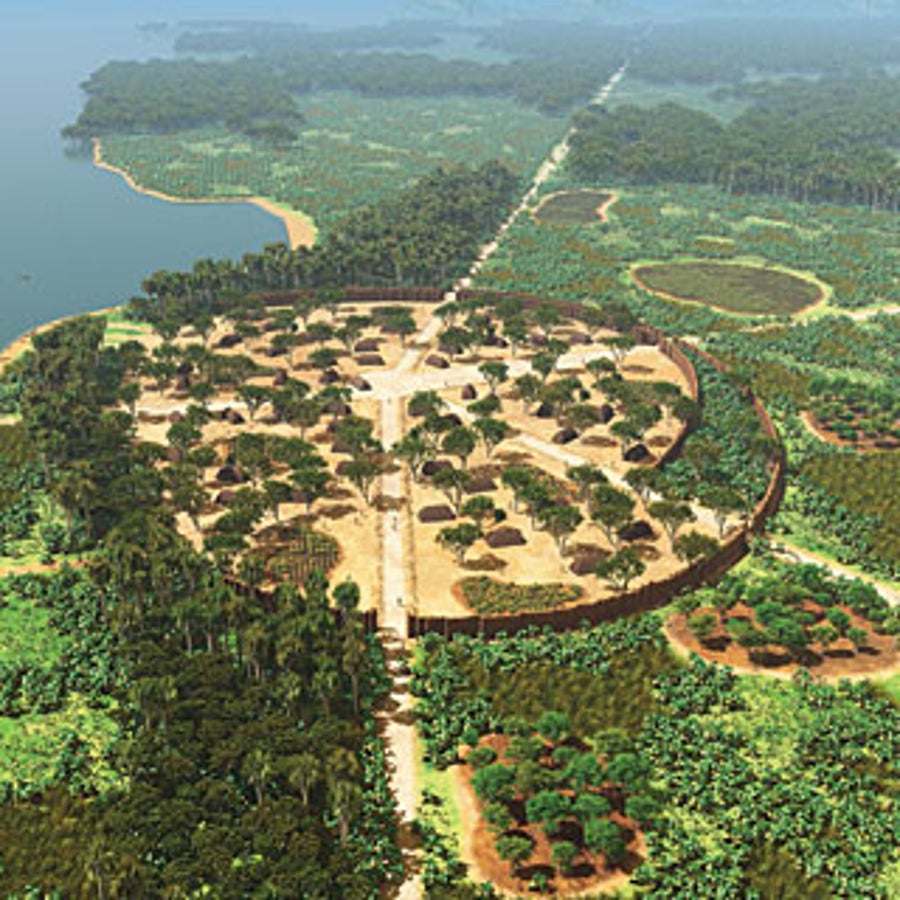
Τα σπίτια και οι πλατείες στην περιοχή Ουπάνο στο ανατολικό Εκουαδόρ συνδέονταν μεταξύ τους με ένα εκπληκτικό δίκτυο δρόμων και καναλιών.
Η περιοχή βρίσκεται στη σκιά ενός ηφαιστείου που δημιούργησε πλούσια τοπικά εδάφη, αλλά μπορεί επίσης να ευθύνεται και για την καταστροφή της κοινωνίας.
Ενώ γνωρίζαμε για πόλεις στα ορεινά της Νότιας Αμερικής, όπως το Μάτσου Πίτσου στο Περού, πιστεύαμε ότι οι άνθρωποι ζούσαν μόνο νομαδικά ή σε μικροσκοπικούς οικισμούς στον Αμαζόνιο.
«Αυτή είναι παλαιότερη από οποιαδήποτε άλλη τοποθεσία που γνωρίζουμε στον Αμαζόνιο. Έχουμε μια ευρωκεντρική άποψη για τον πολιτισμό, αλλά αυτό δείχνει ότι πρέπει να αλλάξουμε την ιδέα μας για το τι είναι πολιτισμός και τι πολιτισμός», λέει ο καθηγητής Στεφάν Ροστέν, διευθυντής ερευνών στο Εθνικό Κέντρο Επιστημονικών Ερευνών στη Γαλλία, ο οποίος ηγήθηκε της έρευνας.
«Αλλάζει τον τρόπο με τον οποίο βλέπουμε τους πολιτισμούς του Αμαζονίου. Οι περισσότεροι άνθρωποι φαντάζονται μικρές ομάδες, που ζούσαν γυμνοί σε καλύβες και καθάριζαν τη γη - αυτό δείχνει ότι οι αρχαίοι άνθρωποι ζούσαν σε περίπλοκες αστικές κοινωνίες», λέει ο συνσυγγραφέας Αντουάν Ντορισόν.
Η πόλη χτίστηκε πριν από περίπου 2.500 χρόνια και οι άνθρωποι έζησαν εκεί για έως και 1.000 χρόνια, σύμφωνα με τους αρχαιολόγους.
Είναι δύσκολο να εκτιμηθεί με ακρίβεια πόσοι άνθρωποι ζούσαν εκεί κάθε φορά, αλλά οι επιστήμονες λένε ότι είναι σίγουρα 10.000 αν όχι 100.000.
Οι αρχαιολόγοι στο πλαίσιο της έρευνας συνδύασαν ανασκαφές με τη μελέτη με τη βοήθεια αισθητήρων λέιζερ μιας περιοχής 300 τετραγωνικών χιλιομέτρων που ήταν σε θέση να εντοπίσουν την κρυμμένη πόλη κάτω από την πυκνή βλάστηση και τα δέντρα.
Η τεχνολογία αυτή που φέρει την ονομασία LiDAR τους επέτρεψε να εντοπίσουν 6.000 ορθογώνιες πλατφόρμες 20 μέτρων επί 10 και δύο με τρία μέτρα σε ύψος.
Ήταν οργανωμένες σε ομάδες από τρία έως έξι γύρω από μια πλατεία όπου υπήρχε μια κεντρική πλατφόρμα.
Οι επιστήμονες πιστεύουν ότι επρόκειτο για σπίτια, αλλά κάποια χρησιμοποιούνταν για τελετουργίες. Ένα συγκρότητμα στο Κιλαμόπες είχε μια πλατφόρμα 140 μέτρων με 40 μέτρα.
Η ανακάλυψη που έχει προκαλέσει δέος στους επιστήμονε ήταν ότι υπήρχε και ένα δίκτυο δρόμων και μονοπατιών που συνέδεαν πολλές από τις πλατφόρμες συμπεριλαμβανομένης ενός δρόμο που εκτείνεται για 25 χιλιόμετρα.
Οι ερευνητές βρήκαν για πρώτη φορά στοιχεία για μια πόλη τη δεκαετία του 1970, αλλά αυτή είναι η πρώτη φορά που η έρευνα είναι ολοκληρωμένη, μετά από 25 χρόνια.
Οι επιστήμονες πιστεύουν ότι αποκαλύπτει μια μεγάλη, πολύπλοκη κοινωνία που φαίνεται να είναι ακόμη μεγαλύτερη από τις γνωστές κοινωνίες των Μάγια στο Μεξικό και την Κεντρική Αμερική.
«Φανταστείτε ότι ανακαλύψατε έναν άλλο πολιτισμό όπως οι Μάγια, αλλά με εντελώς διαφορετική αρχιτεκτονική, χρήση γης, κεραμική», λέει ο Ζοσέ Ιριάρτε, καθηγητής αρχαιολογίας στο Πανεπιστήμιο του Έξετερ, ο οποίος δεν συμμετείχε στην έρευνα αυτή.
Ορισμένα από τα ευρήματα είναι «μοναδικά» για τη Νότια Αμερική, εξηγεί, επισημαίνοντας τις οκταγωνικές και ορθογώνιες πλατφόρμες που είναι τοποθετημένες μαζί.
Το επόμενο στοίχημα για τους ερευνητές είναι να βρουν τι βρίσκεται κάτω από περιοχή 300 τετραγωνικών χιλιομέτρων που δεν έχει ερευνηθεί ακόμα.
https://www.cnn.gr/kosmos/story/400348/ ... n-vlastisi
Αμαζόνιος: Βρέθηκε πόλη 2.500 ετών - Ήταν κρυμμένη μέσα στην βλάστηση
-
Προέλλην

- Right to Repair Champion

- Δημοσιεύσεις: 20804
Αμαζόνιος: Βρέθηκε πόλη 2.500 ετών - Ήταν κρυμμένη μέσα στην βλάστηση

0 .
Hätt ich ne 2te Chance würd ich es genauso machen
Ich dreh mich nich um es geht nur darum wer du heute bist
Ich bin zufrieden, da scheint jemand auf mich aufzupassen
Ob es für Gott oder den Teufel is
Ich bereue nichts
Ich dreh mich nich um es geht nur darum wer du heute bist
Ich bin zufrieden, da scheint jemand auf mich aufzupassen
Ob es für Gott oder den Teufel is
Ich bereue nichts
-
Προέλλην
- Right to Repair Champion
- Δημοσιεύσεις: 20804
Re: Αμαζόνιος: Βρέθηκε πόλη 2.500 ετών - Ήταν κρυμμένη μέσα στην βλάστηση
Και ένα αρκετά παλαιότερο άρθρο, 15ετίας:
Lost Garden Cities: Pre-Columbian Life in the Amazon
When Brazil established the Xingu Indigenous Park in 1961, the reserve was far from modern civilization, nestled deep in the southern reaches of the vast Amazon forest. When I first went to live with the Kuikuro, one of the reserve’s principal indigenous groups, in 1992, the park’s boundaries were still largely hidden in thick forest, little more than lines on a map. Today the park is surrounded by a patchwork of farmland, its borders often marked by a wall of trees. For many outsiders, this towering green threshold is a portal, like the massive gates of Jurassic Park, between the present—the dynamic modern world of soy fields, irrigation systems and 18-wheelers—and the past, a timeless world of primordial nature and society.
Long before taking center stage in the world’s environmental crisis as the giant green jewel of global ecology, the Amazon held a special place in the Western imagination. Mere mention of its name conjures images of dripping, vegetation-choked jungles; cryptic, colorful and often dangerous wildlife; endlessly convoluted river networks; and Stone Age tribes. To Westerners, Amazonian peoples are quintessential simple societies, small groups that merely make do with what nature provides. They have complex knowledge about the natural world but lack the hallmarks of civilization: centralized government, urban settlements and economic production beyond subsistence. In 1690 John Locke famously proclaimed, “In the beginning all the World was America.” More than three centuries later the Amazon still grips the popular imagination as nature at its purest, home to native peoples who, in the words of Rolling Stone editor Sean Woods in October 2007, preserve “a way of life unchanged since the dawn of time.”
Looks can be deceiving. Hidden under the forest canopy are the remnants of a complex pre-Columbian society. Working with the Kuikuro, I have excavated a network of ancestral towns, villages and roads that once supported a population perhaps 20 times its present size. Huge swaths of forest have grown over the ancient settlements, gardens, fields and orchards, which fell into disuse when epidemics brought by European explorers and colonists decimated the native peoples. The region’s rich biodiversity reflects past human intervention. By developing a mix of land uses, soil-enrichment techniques and long crop rotation cycles, the ancestors of the Kuikuro thrived in the Amazon despite its infertile natural soils. Their accomplishments could inform efforts to reconcile the environmental and development goals of this region and other parts of the Amazon.
“Nature Folk”
The most famous person to go looking for lost civilizations in the southern Amazon was Percy Harrison Fawcett. The British adventurer scoured what he called the “uncharted jungles” for an ancient city, Atlantis in the Amazon, replete with stone pyramids, cobbled streets and alphabetic writing. His tales inspired Conan Doyle’s The Lost World and perhaps the Indiana Jones movies. David Grann’s gripping recent book, The Lost City of Z, retraced Fawcett’s path before his disappearance in the Xingu in 1925.
Actually, five German expeditions had already visited the Xinguano people and lands. In 1894 Karl von den Steinen’s book Unter den Naturvölkern Zentral Brasiliens, which described the earliest expeditions, became an instant classic in the fledgling discipline of anthropology. The book set the tone for 20th-century studies of Amazonian peoples as small, isolated groups living in a delicate balance with the tropical forest: “nature folk.” Later anthropologists often viewed the forest environment as uniformly inimical to agriculture; the soil’s poor fertility seemed to preclude large settlements or dense regional populations. By this reasoning, the Amazon of the past must have looked much like the Amazon in recent times.
But this view began to erode in the 1970s as scholars revisited early European accounts of the region, which talked not of small tribes but of dense populations. As Charles Mann’s best-selling book 1491 has eloquently described, the Americas were heavily populated on the eve of the European landings, and the Amazon was no exception. Gaspar de Carvajal, the missionary who chronicled the first Spanish expedition down the river, noted fortified towns, broad, well-kept roads and large numbers of people. Carvajal wrote on June 25, 1542:
We went among some islands which we thought uninhabited, but after we got to be in among them, so numerous were the settlements which came into sight … that we grieved ... and, when they saw us, there came out to meet us on the river over two hundred pirogues [canoes], that each one carries twenty or thirty Indians and some forty ... they were colorfully decorated with various emblems, and they had with them many trumpets and drums ... and on land a marvelous thing to see were the squadron formations that were in the villages, all playing instruments and dancing about, manifesting great joy upon seeing that we were passing beyond their villages.
https://www.scientificamerican.com/arti ... he-amazon/
0 .
Hätt ich ne 2te Chance würd ich es genauso machen
Ich dreh mich nich um es geht nur darum wer du heute bist
Ich bin zufrieden, da scheint jemand auf mich aufzupassen
Ob es für Gott oder den Teufel is
Ich bereue nichts
Ich dreh mich nich um es geht nur darum wer du heute bist
Ich bin zufrieden, da scheint jemand auf mich aufzupassen
Ob es für Gott oder den Teufel is
Ich bereue nichts
-
nemo

- Supreme poster
- Δημοσιεύσεις: 17132
Re: Αμαζόνιος: Βρέθηκε πόλη 2.500 ετών - Ήταν κρυμμένη μέσα στην βλάστηση
διαβασα οτι ανακαλυψαν και σκελετους τριων μετρων αλλα δεν θυμαμαι που
οποτε η αρχαιολογια θα πρεπει να αναβαθμιστει και να αφησει τις χρονολογιες
που διαβαζαμε τοσο καιρο η ιστορια θα πρεπει να παει δεκα χιλ πιο πισω
οποτε η αρχαιολογια θα πρεπει να αναβαθμιστει και να αφησει τις χρονολογιες
που διαβαζαμε τοσο καιρο η ιστορια θα πρεπει να παει δεκα χιλ πιο πισω
0 .
το απόλυτο ένα που συχαίνομαι είναι οι αυταπάτες
επειδη είναι και ο λόγος της ύπαρξής μου
επειδη είναι και ο λόγος της ύπαρξής μου
-
Προέλλην
- Right to Repair Champion
- Δημοσιεύσεις: 20804
Re: Αμαζόνιος: Βρέθηκε πόλη 2.500 ετών - Ήταν κρυμμένη μέσα στην βλάστηση
nemo έγραψε:διαβασα οτι ανακαλυψαν και σκελετους τριων μετρων αλλα δεν θυμαμαι που
οποτε η αρχαιολογια θα πρεπει να αναβαθμιστει και να αφησει τις χρονολογιες
που διαβαζαμε τοσο καιρο η ιστορια θα πρεπει να παει δεκα χιλ πιο πισω
Α, να σου πω εγώ που το διάβασες, στο πορδονιού και μάντεψε, είναι παπάς για χάπατα, όπως και όλα τα υπόλοιπα εκεί μέσα

0 .
Hätt ich ne 2te Chance würd ich es genauso machen
Ich dreh mich nich um es geht nur darum wer du heute bist
Ich bin zufrieden, da scheint jemand auf mich aufzupassen
Ob es für Gott oder den Teufel is
Ich bereue nichts
Ich dreh mich nich um es geht nur darum wer du heute bist
Ich bin zufrieden, da scheint jemand auf mich aufzupassen
Ob es für Gott oder den Teufel is
Ich bereue nichts
-
nemo
- Supreme poster
- Δημοσιεύσεις: 17132
Re: Αμαζόνιος: Βρέθηκε πόλη 2.500 ετών - Ήταν κρυμμένη μέσα στην βλάστηση
Προέλλην έγραψε:nemo έγραψε:διαβασα οτι ανακαλυψαν και σκελετους τριων μετρων αλλα δεν θυμαμαι που
οποτε η αρχαιολογια θα πρεπει να αναβαθμιστει και να αφησει τις χρονολογιες
που διαβαζαμε τοσο καιρο η ιστορια θα πρεπει να παει δεκα χιλ πιο πισω
Α, να σου πω εγώ που το διάβασες, στο πορδονιού και μάντεψε, είναι παπάς για χάπατα, όπως και όλα τα υπόλοιπα εκεί μέσα
σημερα το διαβασα απο ενα σοβαρο σαιτ αλλα δεν εδωσα σημασια στο ονομα
ξενο ηταν και επιστημονικο ...
0 .
το απόλυτο ένα που συχαίνομαι είναι οι αυταπάτες
επειδη είναι και ο λόγος της ύπαρξής μου
επειδη είναι και ο λόγος της ύπαρξής μου
-
Προέλλην
- Right to Repair Champion
- Δημοσιεύσεις: 20804
Re: Αμαζόνιος: Βρέθηκε πόλη 2.500 ετών - Ήταν κρυμμένη μέσα στην βλάστηση
nemo έγραψε:Προέλλην έγραψε:Α, να σου πω εγώ που το διάβασες, στο πορδονιού και μάντεψε, είναι παπάς για χάπατα, όπως και όλα τα υπόλοιπα εκεί μέσα
σημερα το διαβασα απο ενα σοβαρο σαιτ αλλα δεν εδωσα σημασια στο ονομα
ξενο ηταν και επιστημονικο ...
Aποκλείεται. 100% στο πορδονιού ή σε άλλο ψεκοσάϊτ το διάβασες.
Ο σκελετός που βρέθηκε σε εκείνο το σπήλαιο που αναφέρουν τα ψεκοσάϊτς για τα χάπατα, στην πραγματικότητα είχε ύψος 1,98 και όχι 3 μέτρα. Τα 3 μέτρα μαζί με εκείνη την μουσαντένια φώτο τα αναφέρουν μόνο τα ψεκοσάϊτς για τα χάπατα https://www.pronews.gr/istoria/perpatis ... -eyrimata/
According to Paiute oral history, the Si-Te-Cah or Sai'i are a legendary tribe of red-haired cannibalistic giants. Mummified remains of a man 6 feet 6 inches (1.98 m) tall were discovered by guano miners in Lovelock Cave in 1911.[4]: 168 Adrienne Mayor writes about the Si-Te-Cah in her book, Fossil Legends of the First Americans.[12] She suggests that the 'giant' interpretation of the skeletons from Lovelock Cave and other dry caves in Nevada was started by entrepreneurs setting up tourist displays and that the skeletons themselves were of normal size. About 100 miles (160 km) north of Lovelock there are plentiful fossils of mammoths and cave bears, and their large limb bones could easily be thought to be those of giants by an untrained observer. She also discusses the reddish hair, pointing out that hair pigment is not stable after death and that various factors such as temperature, soil, etc. can turn ancient very dark hair to a rusty-red color.
https://en.wikipedia.org/wiki/Lovelock_Cave
Σε πιάσαν κώτσο γι ακόμη μια φορά. Το πρόβλημα είναι ότι δεν πάτε στο δάσος για κυνήγι, την ψεκιά την ψάχνετε γιατί σας φτιάχνει.
0 .
Hätt ich ne 2te Chance würd ich es genauso machen
Ich dreh mich nich um es geht nur darum wer du heute bist
Ich bin zufrieden, da scheint jemand auf mich aufzupassen
Ob es für Gott oder den Teufel is
Ich bereue nichts
Ich dreh mich nich um es geht nur darum wer du heute bist
Ich bin zufrieden, da scheint jemand auf mich aufzupassen
Ob es für Gott oder den Teufel is
Ich bereue nichts