Tango noir ή αλλιώς πουτλερισμός = φασισμός - ναζισμός

Όλες οι διεθνείς ειδήσεις.
Άβαταρ μέλους
Προέλλην
Right to Repair Champion
Δημοσιεύσεις: 20678

Re: Tango noir ή αλλιώς πουτλερισμός = φασισμός

Δημοσίευσηαπό Προέλλην » 24 Φεβ 2023, 00:20

Εικόνα

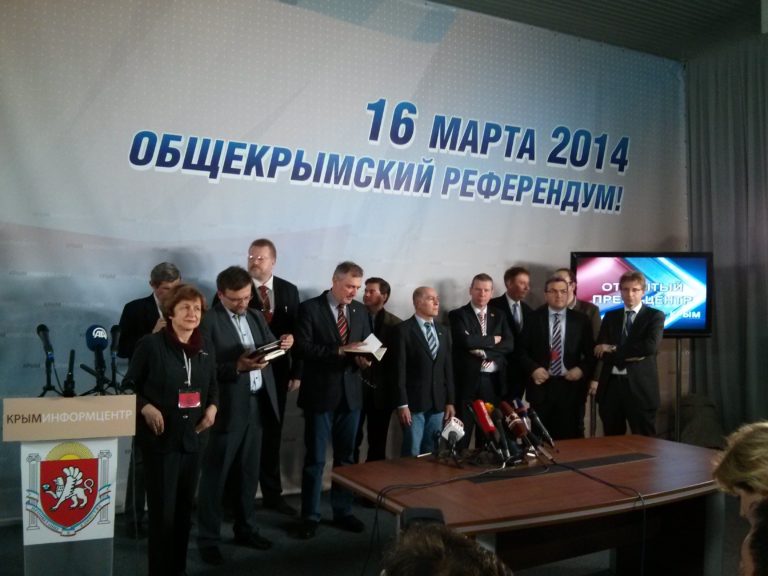
“Observers” of the “referendum” in Crimea followed by Russia’s annexation of this Ukrainian peninsula, left to right: Charalampos Angourakis (Communist Party of Greece); Tatjana Ždanoka (Latvian pro-Russian party For Human Rights in United Latvia); the ECGA’s Mateusz Piskorski; Finnish neo-Stalinist Johan Bäckman; Ewald Stadler; Robert Stelzl; Hikmat Al-Sabty (Die Linke, Germany); Frank Creyleman (Flemish Interest, Belgium); Valerio Cignetti (Tricolour Flame, Italy); Aymeric Chauprade (National Front, France); Enrique Ravello (Platform for Catalonia, Spain); Fabrizio Bertot (Forward Italy). Crimea, 14 March 2014.

Κουμμουνισταί, ροζουλιοί και φασίστες μπλέξανε τα μπούτια τους για χάρη των σικέ πουτλερικών δημοψηφισμάτων :laugh1:


Εικόνα

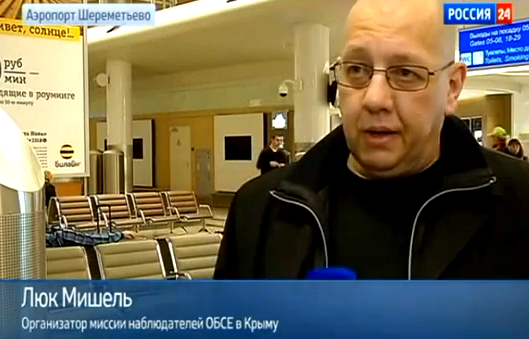
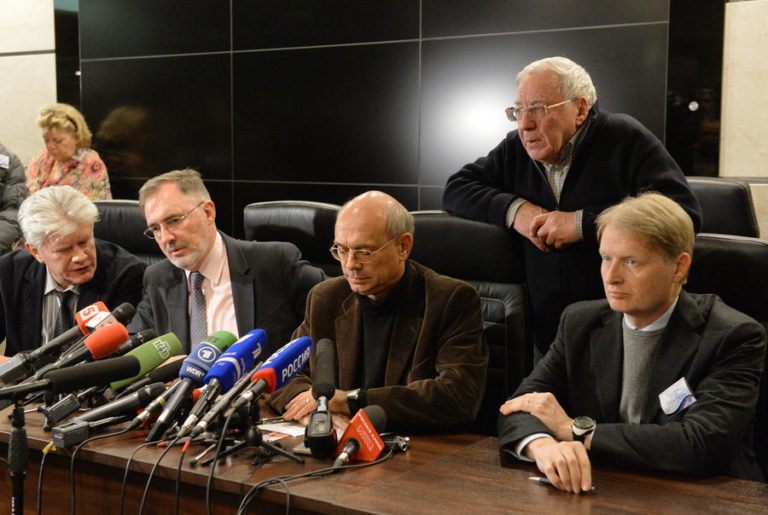
The OSCE officially declared the Crimean “referendum” illegal and ruled out any possibility of an OSCE observation of the “referendum”, but the Russian news TV channel “Russia-24” falsely presented the EODE’s Luc Michel as “the organiser of the OSCE observation mission in Crimea” and lied that “around 100 OSCE observers would be working in Crimea”.


Εικόνα

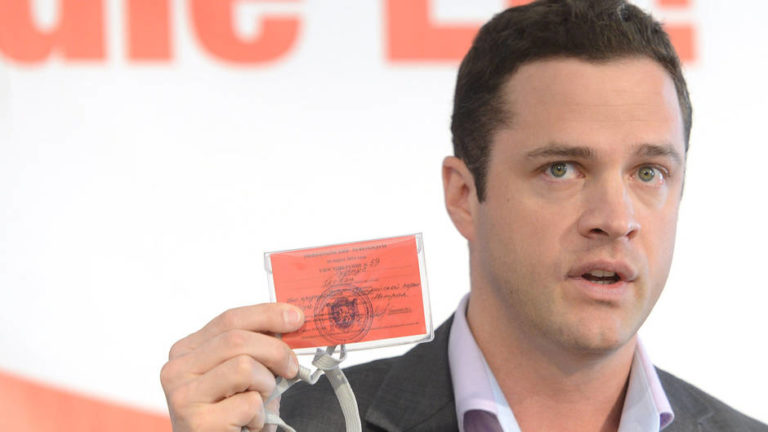
Johann Gudenus, a member of the far-right Freedom Party of Austria, as an “observer” of the Crimean “referendum”, March 2014.
0 .
Hätt ich ne 2te Chance würd ich es genauso machen
Ich dreh mich nich um es geht nur darum wer du heute bist
Ich bin zufrieden, da scheint jemand auf mich aufzupassen
Ob es für Gott oder den Teufel is
Ich bereue nichts

Άβαταρ μέλους
Προέλλην
Right to Repair Champion
Δημοσιεύσεις: 20678

Re: Tango noir ή αλλιώς πουτλερισμός = φασισμός - ναζισμός

Δημοσίευσηαπό Προέλλην » 24 Φεβ 2023, 00:26

Εικόνα

“Observing” the “parliamentary elections” in the “Donetsk People’s Republic” (DNR), a territory in Eastern Ukraine occupied by Russian armed forces, left to right: Márton Gyöngyösi of the Hungarian far-right Jobbik party and the ECGA’s Mateusz Piskorski. Donetsk, November 2014.


Εικόνα

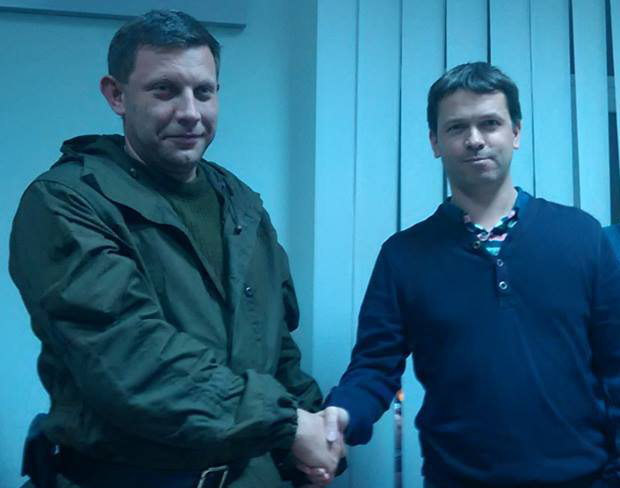
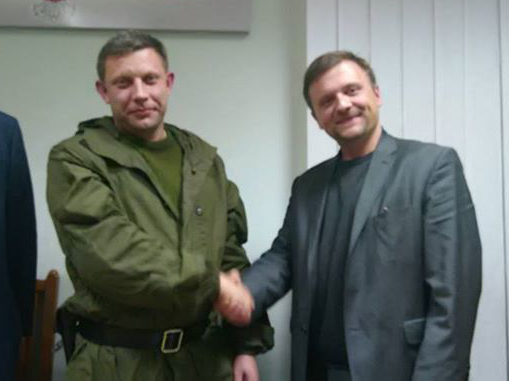
The EODE’s Fabrice Beaur (right) and the DNR’s leader Aleksandr Zakharchenko (left). Donetsk, November 2014.


Εικόνα

The ECGA’s Mateusz Piskorski (right) and the DNR’s leader Aleksandr Zakharchenko (left). Donetsk, November 2014.


Εικόνα

“Observers” of the “parliamentary elections” in the DNR: Ewald Stadler (second from the left) of the Austrian right-wing populist Reform Conservatives and Jean-Luc Schaffhauser (second from the right) of the French far-right Marine Blue France Gathering. Donetsk, November 2014.
0 .
Hätt ich ne 2te Chance würd ich es genauso machen
Ich dreh mich nich um es geht nur darum wer du heute bist
Ich bin zufrieden, da scheint jemand auf mich aufzupassen
Ob es für Gott oder den Teufel is
Ich bereue nichts

Άβαταρ μέλους
Προέλλην
Right to Repair Champion
Δημοσιεύσεις: 20678

Re: Tango noir ή αλλιώς πουτλερισμός = φασισμός - ναζισμός

Δημοσίευσηαπό Προέλλην » 24 Φεβ 2023, 00:31

Εικόνα

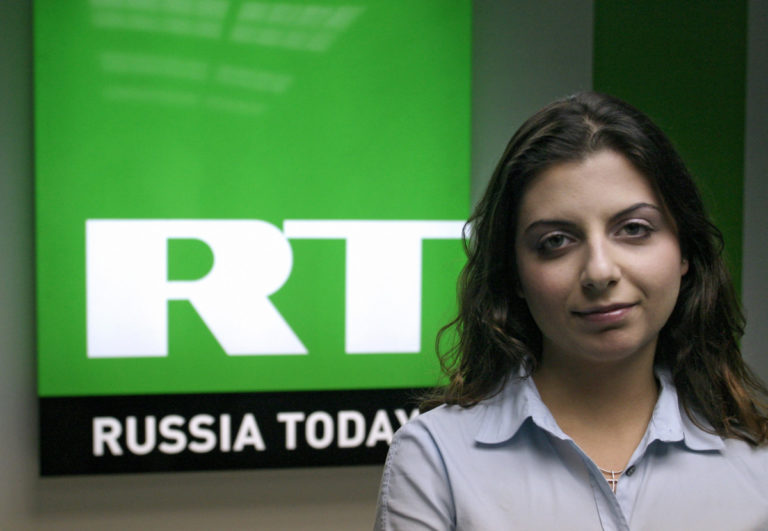
Margarita Simonyan, Editor-in-Chief of Russia Today.


Εικόνα

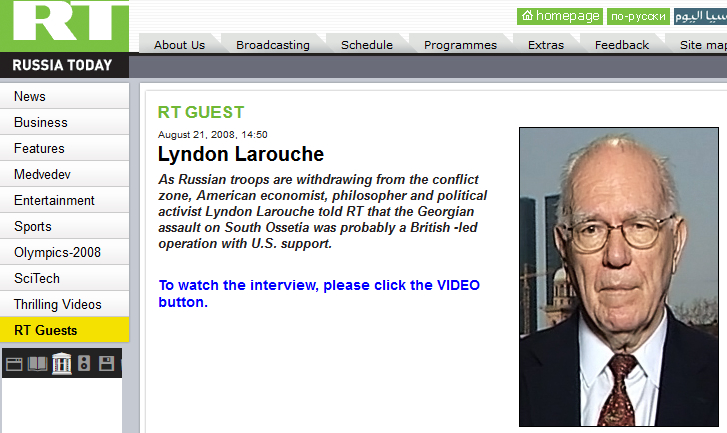
American far-right activist Lyndon LaRouche, a special guest on Russia Today on the 21st of August 2008.


Εικόνα

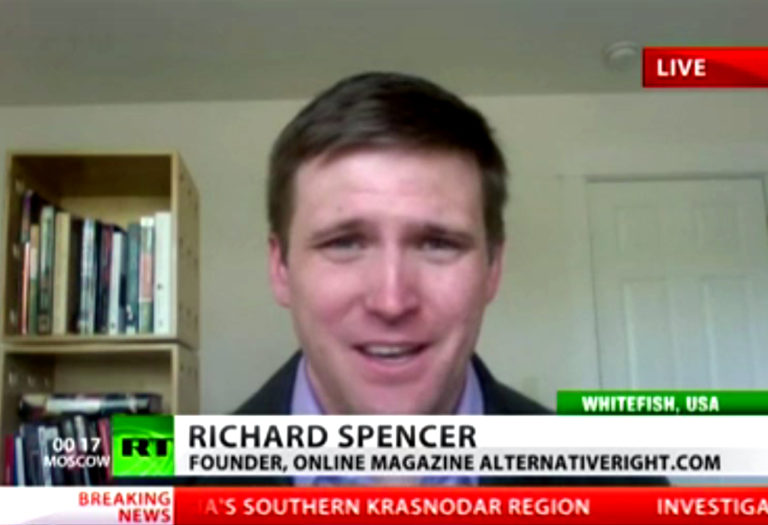
American neo-Nazi Richard Spencer as an “expert” on Libya on Russia Today , 9 July 2012.


Εικόνα

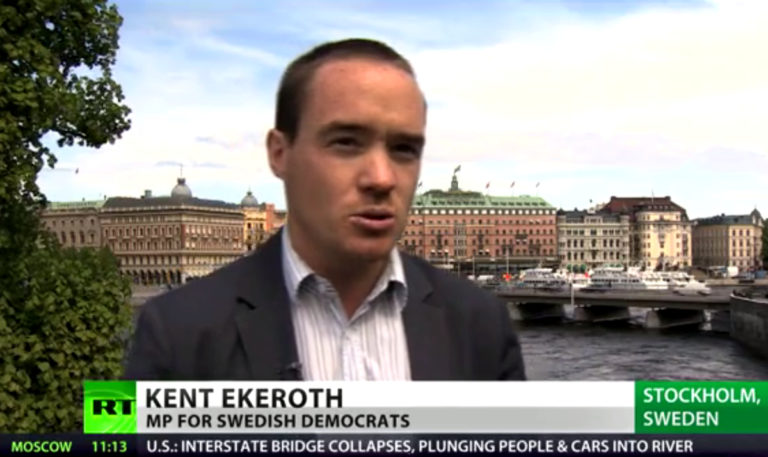
Kent Ekeroth, MP of the far-right Sweden Democrats, as a commentator for RT on its report on integration in Sweden, 23 May 2013.


Εικόνα

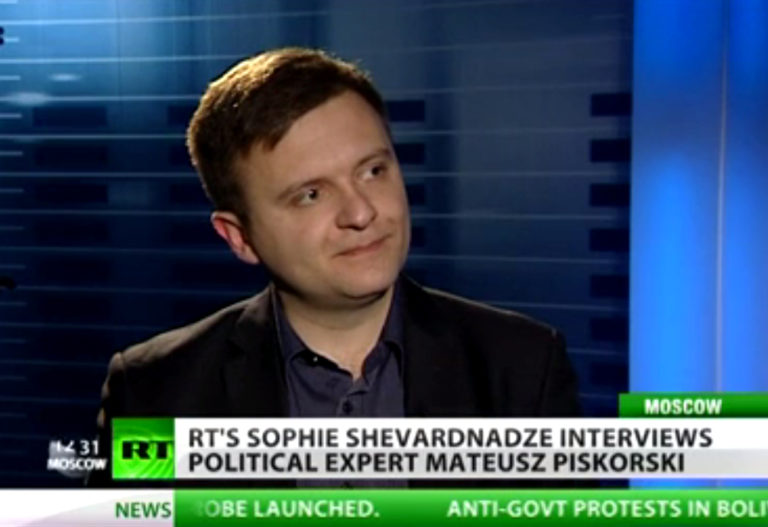
Polish far-right activist Mateusz Piskorski was a frequent commentator for RT.
0 .
Hätt ich ne 2te Chance würd ich es genauso machen
Ich dreh mich nich um es geht nur darum wer du heute bist
Ich bin zufrieden, da scheint jemand auf mich aufzupassen
Ob es für Gott oder den Teufel is
Ich bereue nichts

Άβαταρ μέλους
Προέλλην
Right to Repair Champion
Δημοσιεύσεις: 20678

Re: Tango noir ή αλλιώς πουτλερισμός = φασισμός - ναζισμός

Δημοσίευσηαπό Προέλλην » 24 Φεβ 2023, 00:42

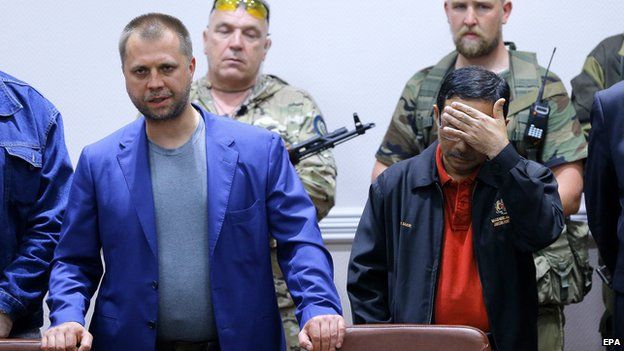
Για να δούμε και τους εκλεγμένους :fico: λαϊκούς ηγέτες των κατεχόμενων και τους λοιπούς επι τα αυτά :dunno:

Εικόνα

Alexander Borodai

is a Russian member of the State Duma of the 8th convocation for the party United Russia. Borodai was Prime Minister of the self-proclaimed Donetsk People's Republic in 2014 after the Donetsk People's Republic declared its independence from Ukraine on 12 May 2014, Borodai was appointed as Prime Minister by the republic's Supreme Council on May 16, 2014. Borodai, a Russian citizen, had earlier worked as a political adviser to Sergey Aksyonov, the prime minister of the Republic of Crimea. On 7 August 2014, Borodai announced his resignation.He was succeeded by Alexander Zakharchenko; under Zakharchenko, Borodai became Deputy Prime Minister.

In his interview to Novaya Gazeta Borodai acknowledged that he has known Igor Girkin since after the war in Transnistria

Career and education

Borodai has a degree in philosophy from Moscow State University. In 1994 he worked for the RIA Novosti as a military correspondent during the First Chechen War. Since 1996 he worked for the openly anti-semitic Zavtra [ru] newspaper, which has called for pogroms against Jews. :whistle: Since 1998 he worked as a "political technologist" specialising in elections. :fico: Since 2001 he has headed the consulting business "Sotsiomaster" specializing in crisis management. Borodai and the future military commander of the Donetsk People's Republic Igor Strelkov were close associates of the far-right nationalist Russian businessmen Konstantin Malofeev.

According to Russian media, he was appointed as a deputy director of Russian FSB State Security in 2002 at the age of 35,[when he held the rank of major general – Borodai dismissed this as a hoax. He currently has a consultancy in Moscow and worked at a major investment fund.

Nationalism

In the 1990s he edited a Russian newspaper Zavtra [ru] (Завтра -"Tomorrow"), run by journalist Alexander Prokhanov.

In December 2011, Borodai and Prokhanov co-founded the "patriotic" Web TV channel Den-TV (“Day”).] Den-TV's programming has regularly included Konstantin Dushenov, who has previously been imprisoned for anti-semitic incitement.

Politics

Borodai refers to himself as "professional consultant" with expertise in ethnic conflict. “I have resolved all kinds of complicated conflict situations,” he told journalists.

Crimea

Borodai worked as an advisor to appointed Crimea governor Sergei Aksyonov. Borodai claims he worked as a “political strategist” during the annexation of Crimea by Russia, and states that the political forces that facilitated the takeover are the same as those active in the Donetsk Republic: "Naturally the people who set up these popular movements and were the initiators are the same people, they are connected to each other... So when I finished the work in Crimea I automatically... came here to work in southeast Ukraine.” :dunno:

Donetsk

Following the 2014 Donetsk status referendum; on 16 May 2014 Borodai was appointed Prime Minister of the Donetsk People's Republic.

As Prime Minister he was replaced by Alexander Zakharchenko. Borodai (also) stated he would become Zakharchenko's Deputy Prime Minister. He further stated in the 7 August 2014 press conference that he believed a "native Muscovite" like him should not lead the Donetsk People's Republic. In 2017 Boroday claimed (talking to Reuters) that Zakharchenko succeeded him in a Russian government effort "to try to show the West that the uprising was a grassroots phenomenon".

Russia

In the 2021 Russian legislative election Borodai was elected to the State Duma for the party United Russia.

https://en.wikipedia.org/wiki/Alexander_Borodai
0 .
Hätt ich ne 2te Chance würd ich es genauso machen
Ich dreh mich nich um es geht nur darum wer du heute bist
Ich bin zufrieden, da scheint jemand auf mich aufzupassen
Ob es für Gott oder den Teufel is
Ich bereue nichts

Άβαταρ μέλους
Προέλλην
Right to Repair Champion
Δημοσιεύσεις: 20678

Re: Tango noir ή αλλιώς πουτλερισμός = φασισμός - ναζισμός

Δημοσίευσηαπό Προέλλην » 04 Μαρ 2023, 22:51

Russia's long history of neo-Nazis

Some have pointed out the far right received only 2% of the vote in Ukraine’s 2019 parliamentary elections, far less than in most of Europe. Others have drawn attention to Ukraine’s Jewish president, Volodymyr Zelenskyy, and the efforts of the Ukrainian state to protect minorities like Crimean Tatars and LGBTQ+ people, who are subject to brutal persecution in Russia.

What has received less coverage is the Putin regime’s own record of collaboration with far-right extremists. Even as Russian diplomats condemned “fascists” in the Baltic states and Kremlin propagandists railed against imaginary “Ukronazis” in power in Kyiv, the Russian state was cultivating its own homegrown Nazis.


The roots of neo-Nazism in Putin’s Russia

The origins of this relationship date to the late 1990s, when Russia was shaken by a wave of racist violence committed by neo-Nazi skinhead gangs. After Putin’s accession to the presidency in 2000, his regime exploited this development in two ways.

First, it used the neo-Nazi threat to justify the adoption of anti-extremism legislation, a longstanding demand of some Russian liberals. Ultimately, this legislation would be used to prosecute Russian democrats.

Second, the Kremlin launched “managed nationalism”, an attempt to co-opt and mobilise radical nationalist militants, including neo-Nazis, as a counterweight to an emerging anti-Putin coalition of democrats and leftist radicals.

Moving Together, a pro-Putin youth organisation notorious for its campaign against postmodernist literature, made the first move by reaching out to OB88, the most powerful skinhead gang in Russia.

This cooperation expanded in the aftermath of Ukraine’s Orange Revolution of 2004. To insulate Russia against the contagion of pro-democracy protest, the Kremlin transformed Moving Together into a more ambitious project called “Nashi”, or “Ours”.

As part of its preparations to confront a potential democratic uprising in Russia, Nashi enlisted football gang members, whose subculture overlapped with the neo-Nazi underground.

During 2005, Nashi’s thugs staged a series of raids on anti-Putin youth groups. The most violent attack, which left four left-wing activists in hospital, led to the arrest of the assailants. They were released after a visit to the police station from Nikita Ivanov, the Kremlin functionary who supervised the regime’s loyalist youth organisations.

The resulting scandal provoked a reconfiguration of “managed nationalism”. While Nashi distanced itself from football gangs, its radical militants migrated to two rival Kremlin proxies, the nationalist “Young Russia” group and the anti-immigration “Locals” group. These organisations became bridges between the neo-Nazi subculture and the Kremlin.


Neo-Nazi leaders implicated in killings

As I demonstrated in a recent study of the Kremlin’s relationship with Russian fascists, these linkages made possible a bold experiment to create a pro-Putin neo-Nazi movement.

In 2008-09, the Kremlin was threatened by Russian opposition activist Alexei Navalny’s efforts to build an anti-Putin coalition of democrats and radical nationalists in Russia. In response, the Kremlin began to work with Russkii Obraz (“Russian Image”, or “RO” for short), a hardcore neo-Nazi group best known for its slick journal and its band, Hook from the Right.

With the assistance of Kremlin supervisors, RO attacked nationalists who were abandoning the skinhead subculture for Navalny’s anti-Putin coalition. In return, RO was granted privileged access to public space and the media.

Its leaders held televised public discussions with state functionaries and collaborated openly with Maksim Mishchenko, a member of parliament from the ruling party. Perhaps most shockingly, RO also hosted a concert by the infamous neo-Nazi band Kolovrat in Moscow’s Bolotnaya Square, within earshot of the Kremlin.

The problem for the Kremlin was that RO’s leader, Ilya Goryachev, was a fervent supporter of the neo-Nazi underground, the skinheads who committed hundreds of racist murders in the second half of the 2000s. The authorities turned a blind eye to RO’s production of a two-hour internet “documentary” titled Russian Resistance, which celebrated these killers as patriotic heroes and called for armed struggle against the regime.

But they could not ignore the arrest on murder charges of Nikita Tikhonov, an ex-skinhead and cofounder of RO. Tikhonov was the leader of BORN (“Fighting Organisation of Russian Nationalists”), a terrorist group that committed a string of murders of public figures and antifa militants.

The victims included the renowned human rights lawyer Stanislav Markelov and journalist Anastasia Baburova. Tikhonov was convicted of their murders in 2011.

The police investigation revealed that Goryachev regarded BORN and RO as the armed and political platforms of a neo-Nazi insurgency, on the model of the IRA and Sinn Féin in Ireland and Northern Ireland.

The court materials show that as Goryachev was reporting to his Kremlin supervisors, he was also advising Tikhonov about the choice of murder victims. Goryachev was found guilty in 2015 of ordering the murders of numerous people, including Markelov.

The adverse publicity wrecked the careers of some of the Kremlin’s Nazi promoters, but veterans of RO flourished in the propaganda institutions of Putin’s increasingly autocratic regime.

One of them is Anna Trigga, who worked for the Internet Research Agency, the trolling factory that interfered in the 2016 US presidential election and tried to foment anti-Muslim hatred in Australia. Another is Andrei Gulyutin, editor of the website Ridus, an important platform of pro-Putin Russian nationalism.


Promoting neo-Nazis overseas

No less important is the role of neo-Nazis and other right-wing figures in Russia’s onslaught against Ukraine.

In 2014, RO’s Aleksandr Matyushin helped to terrorise supporters of the Ukrainian state in Donetsk on the eve of Russia’s proxy war in eastern Ukraine. He went on to become a major field commander.

Today, RO’s Dmitrii Steshin, a celebrated war correspondent for a mass circulation tabloid, disseminates lies blaming Ukrainian false-flag operations for atrocities committed by Russian forces.

The Kremlin’s cultivation of domestic neo-Nazis is matched by its promotion of neo-Nazis in the West. Some have amplified anti-Western conspiracy theories as “experts” on RT, the Kremlin’s cable TV propaganda channel.

Others have served the Kremlin as “monitors” who applaud the conduct of fraudulent elections. Meanwhile, Rinaldo Nazzaro, an American, has been quietly running The Base, the international neo-Nazi terrorist organisation, from an apartment in St Petersburg.

Putin’s weaponisation of neo-Nazis was always a risky strategy, but it was not irrational. Unlike mainstream nationalists, who tend to support the idea of free elections, neo-Nazis reject democratic institutions and the very idea of human equality. For a dictator dismantling democracy and constructing an authoritarian regime, they were ideal accomplices.

https://www.latrobe.edu.au/news/article ... -neo-nazis
0 .
Hätt ich ne 2te Chance würd ich es genauso machen
Ich dreh mich nich um es geht nur darum wer du heute bist
Ich bin zufrieden, da scheint jemand auf mich aufzupassen
Ob es für Gott oder den Teufel is
Ich bereue nichts


Επιστροφή σε “Διεθνή”